In this blog I hope to share my interests in all aspects of art and design, be it painting, graphic art, applied art, pattern design, a love of letter forms or garden design. I have dabbled in all of these to varying degrees, more often than not, for the sheer pleasure of it, though my main activity is as a painter – welcome to my studio.
Table of Contents
5. A Chance Encounter
29 – 09 – 2026
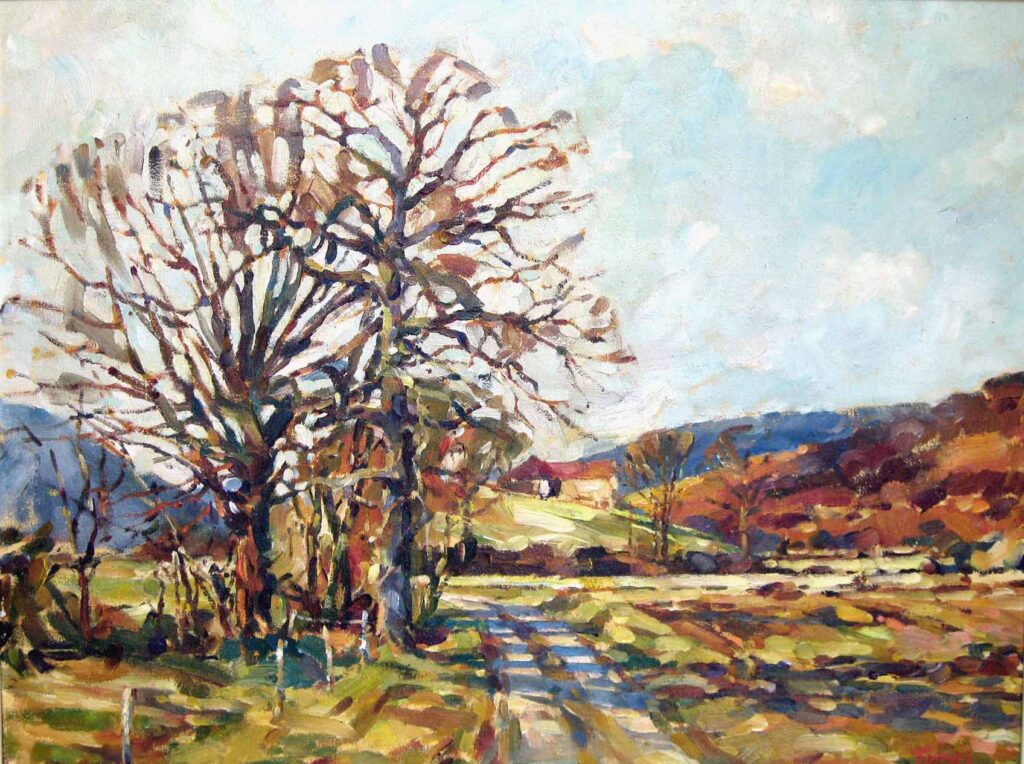
A low afternoon sun cast long shadows from a clear January sky, bleaching a landscape already laid bare by winter frosts and bitter winds. It emphasised each undulation leaving deep hollows where its rays could not penetrate. A group of trees to the left stood stark against a stone-blue sky, their trunks catching the light to one side. At first glance they looked colourless but on closer inspection, revealed a wide spectrum within their shadowy mass. They cast long tentacles of blue-grey shadows across the track in front of me, rippling over ploughed fields drawing clear lines that led the eye to the vines in the field beyond. A farmhouse straddled the side of a hill in the distance and from one of its barns burst a glow of red – a perfect focal point, while distant hills turning an intense blue formed a counterbalance to the group of trees on my left. This was what I was looking for. I unloaded the car and began to paint furiously. I had only stopped to check the front tyre of my car and when I looked up, there it was, why had I not noticed it before? I had walked along this track almost every day for the previous three years; the house in the distance was where I lived! By chance, I had stopped at the very moment in the day when all these elements came into play. This was just a brief moment in time, an hour before or later and it would not be here, not like this. As I stood painting I realised that I had painted numerous subjects in this same small area close to the house, each had been like this, a chance encounter, a brief moment each year and only at a certain time of day.
The landscape is changing all the time; being a plein air painter is all about being aware of these changes, being receptive to the things around you and being able to respond to them: the play of light, the colours, the composition, finding the right angle, playing the hard structure off against the soft – getting the balance right. I still have this painting, it hangs on the wall in the house where I now live and brings back special memories. I will never sell it. I can remember painting it as if it were yesterday; the urgency to capture the subject before the light changed, the excitement of what was to come, the magic of being in that moment and when I look at it now I can still feel the chill in the air.
Above: Couleurs de la Terre (Colours of the Earth), Oil on Canvas, 45cm x 61cm
4. Sylvester's Story
15 - 09 - 2026
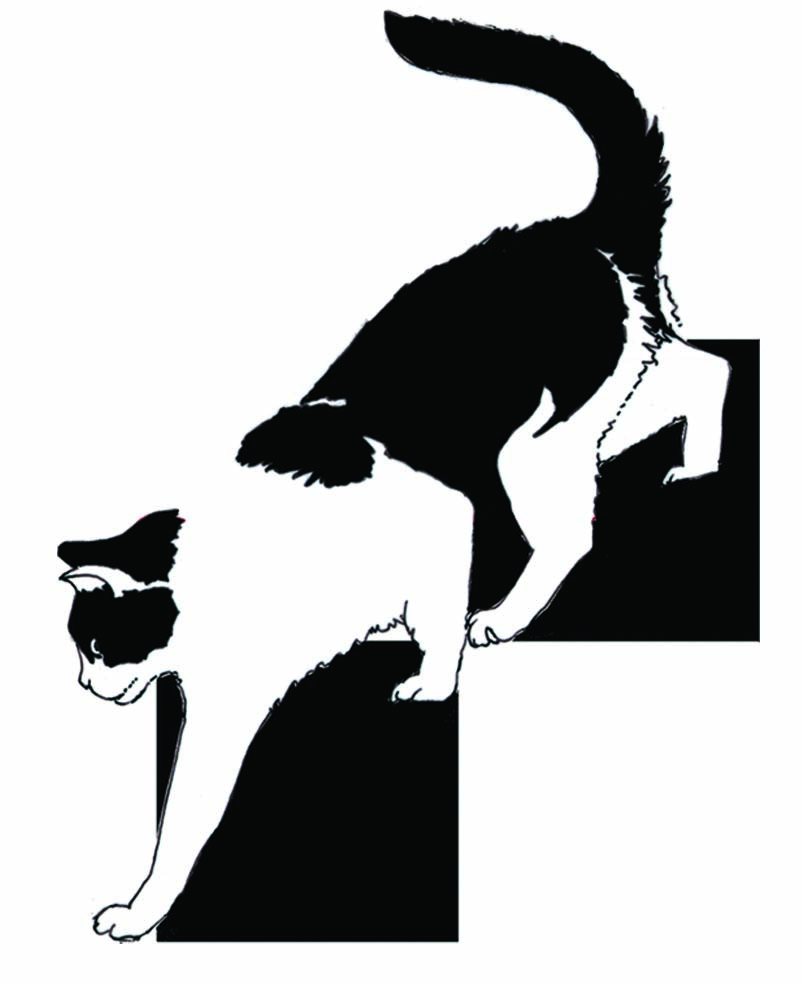
For most people, acquiring a cat is a straightforward process. Perhaps a friends cat has had kittens or perhaps they go to an animal charity or animal rescue centre, or someone who breeds cats. Not so for us. We did not choose Sylvester, he choose us! We were not looking for a cat, he decided we were. We had no say in the matter – he was on a mission.
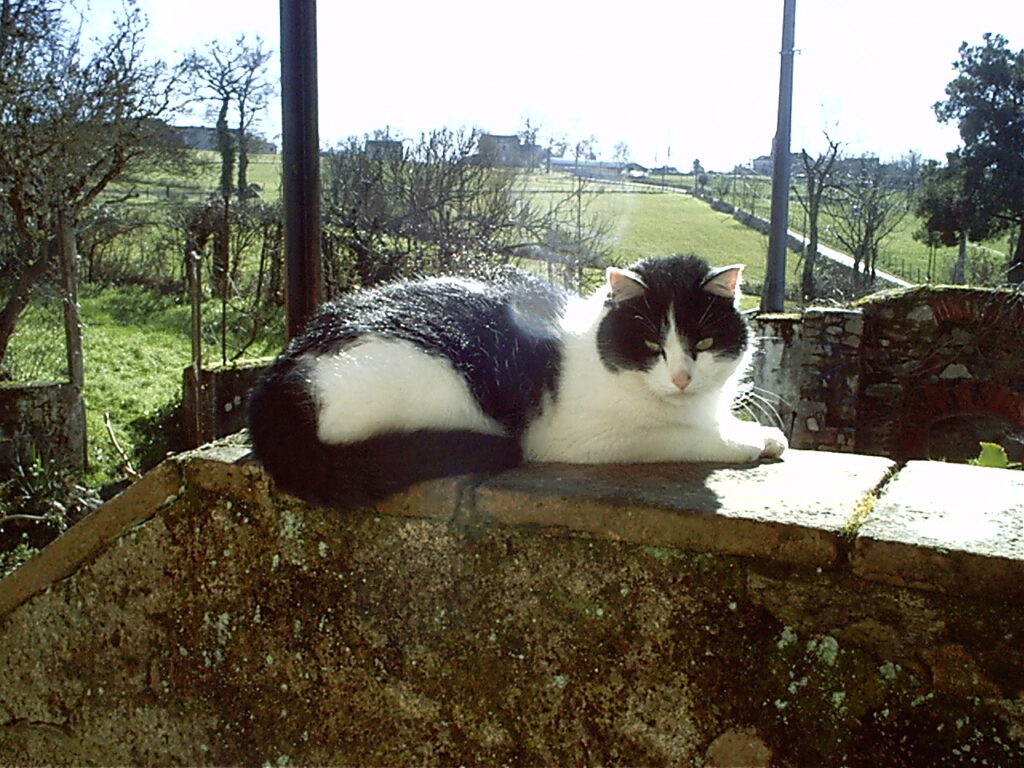
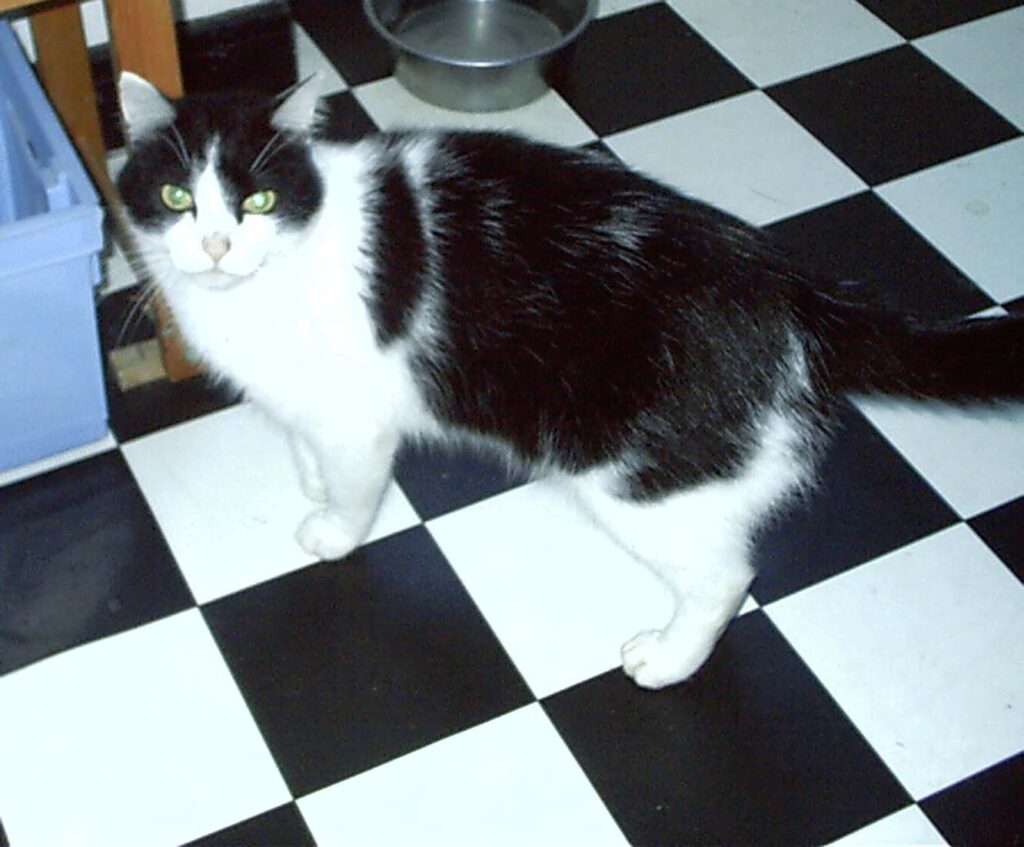
I first caught sight of Sylvester about three quarters of the way down a very steep ravine at the back of our house in the south west of France, where we were living at the time. He was very easy to pick out, his strong black and white markings contrasting with the vegetation made him easy to see and he was heading in our direction. Up through the trees, brambles and thick undergrowth he came; an area riddled with snakes and wild boar, each day getting a little closer. I did everything I could to discourage him but he persisted – and when he got to our terrace and my wife put down a bowl of milk for him I knew I had lost the battle! He was not Sylvester then, of course, we had no idea if he was male or female. We assumed he belonged to someone in the nearby village or the garden nursery in the valley at the bottom of the ravine – but after several enquiries we drew a blank.
It very quickly became apparent that he was feral, and was as wild as wild could be. It was only after we had taken him to a vet to have him checked over and sexed did we understand what was going on. He was male and it was not us he was interested in, but our tortoiseshell tabby cat (Sable) who was female. He was a magnificent creature; big, solid and in the prime of his life – and he was looking for a mate! He had no way of knowing Sable had also been to the vet and there was no way this romance was ever going to come to anything. Still, hope springs eternal so he adopted us!
We had no idea how old he was, perhaps two or three years. It was my wife who gave him his name, she thought he looked like the black and white cat in the Looney Tunes cartoon Tweety & Sylvester. So, Sylvester he became with his tufts of white hair on the tips of his ears that made him look like a Lynx. We were the only humans he would allow anywhere near him which was strange as he was so comfortable in our company – but would disappear if anyone else arrived at the house.
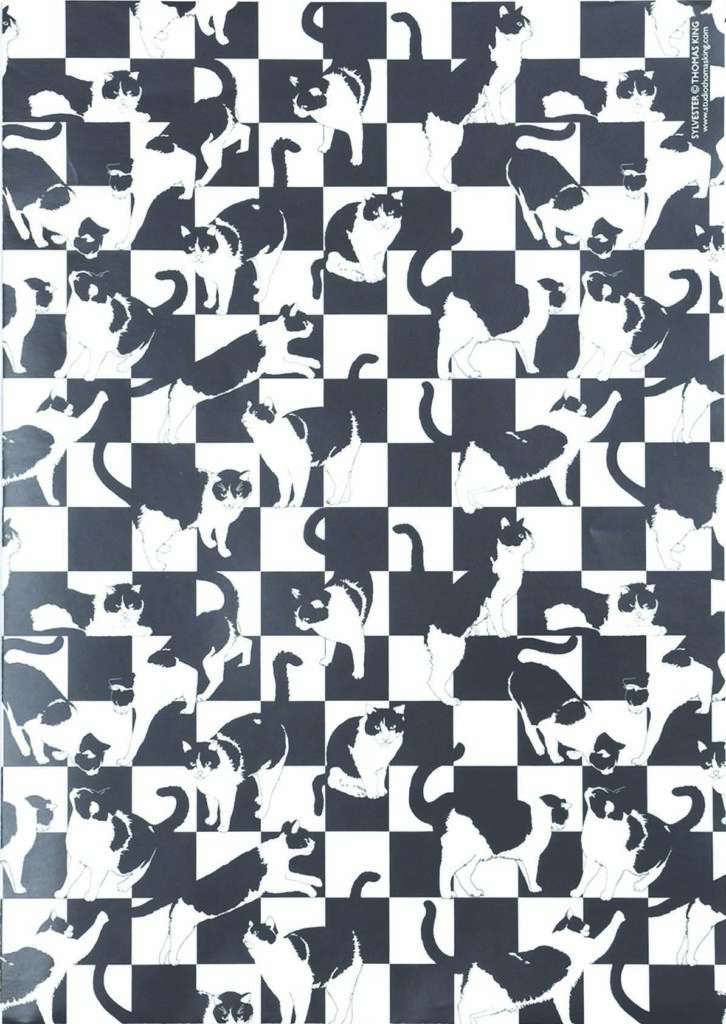
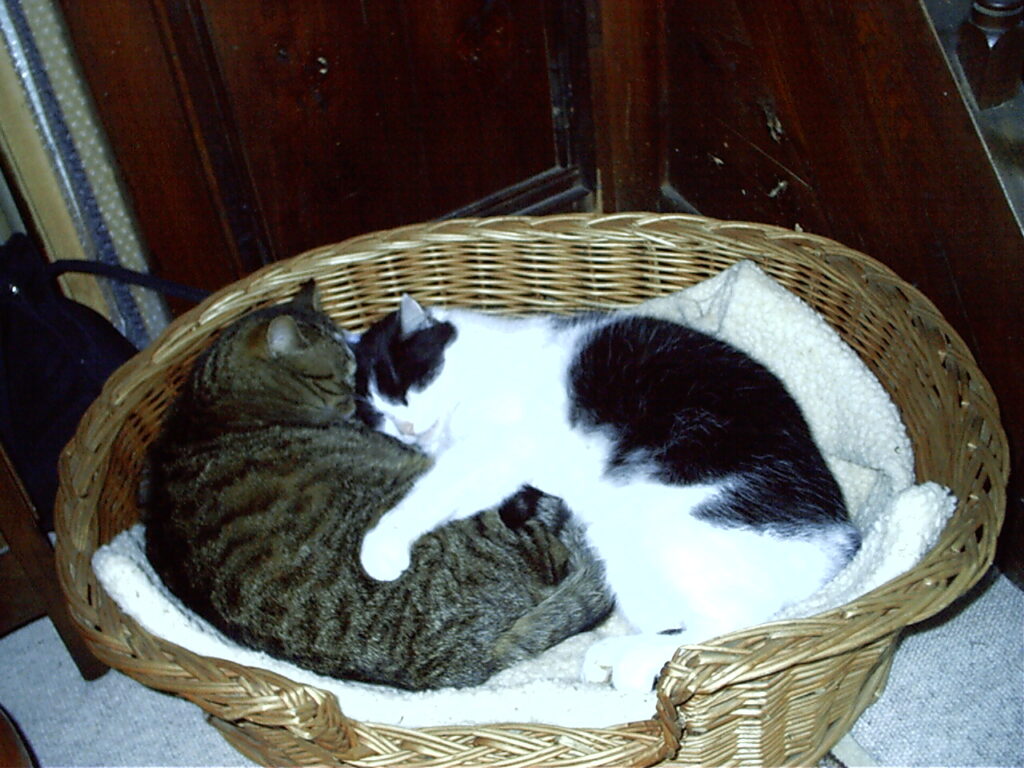
He worshiped Sable and was never happier than when sharing a basket with her. He would sleep on her head, lie all over her and get as close as possible. Her attitude to him was – get off, go away, leave me alone. Despite all of this domestic bliss Sylvester was his own man and he had his own routine. Every evening around 9pm he would go to the door and want out and he would stay out all night doing what butch cats do! At 7am the following morning he would be back at the door wanting in to have his breakfast. It was during these return visits to the house that my designers eye picked up on something wonderful that was happening. Our bedroom was just across the hall from the kitchen which had a black and white chequer-board pattern on the floor. My wife and I would sit up in bed in the morning with a cup of tea and watch Sylvester disappear in and out of the black and white squares as he walked across the floor. After some time my wife said to me ‘you should do something with Sylvester.’ I knew exactly what she meant and had already decided what I was going to do. I would create a pattern by turning the squares into building blocks and have Sylvester doing various activities on them. The whole thing would be in black and white so he could disappear in and out of the pattern.
Creating the squares was simple enough but what to do about Sylvester playing on them? The stairs in the house were open on one side so we got some chicken, and placed Sylvester on the stairs while my wife dangled the chicken as he ran up and down the stairs chasing it. Meanwhile I stood to the side of the stairs with a camera and photographed all these antics. I then traced the images I wanted, turned them into black and white illustrations and arranged them on the squares I had already prepared. There were some problems along the way but I eventually ended up with the illustrations of Sylvester joined up together with the squares.
Over the next year or so I tweaked the design on the computer but was not in a financial position to do anything about it. Then, one day, disaster struck! My wife had decided it was time to take both Sable and Sylvester to the vet for their annual injections. We had two carrier baskets for transporting cats. One was in perfect condition but the other had lost one of the clips that held the front in place and we had replaced it with a shoelace tied in a knot. Unfortunately, my wife put Sylvester in the one with the faulty front. Everything was fine until they got to the small town where the vet was. My wife lifted Sylvester in his carrier out of the car first and placed him on the ground as she went back to get Sable. Sylvester freaked out, he was not used to people or traffic, he tore at the shoelace with his claws, cut through it and somehow managed to squeeze through the gap. He took off in a state of panic and was last seen running along the railway track out of town. It was the last time we ever saw him!
We spent weeks looking for him, we put posters up with his picture all around the area, we scoured the countryside, but to no avail – he was gone!
From time to time I would revisit the design on the computer and make some slight changes, but it would be many years and, in a different country, before I finally got round to producing some gift wraps with the pattern I had created. We did not worry for Sylvester’s welfare, after all, he had survived in the wild before he came to us. We knew he would be all right but we felt the loss very badly – he had become part of the family. Some months later my wife was discussing these events with a lady friend who was much older and wiser than ourselves and she simply said ‘maybe it was his time to go’. Only then did we accept that he had come into our lives of his own volition, he had fulfilled his purpose and yes, maybe it was his time to go.
3. A Reluctant Gardener
24 - 08 - 2026
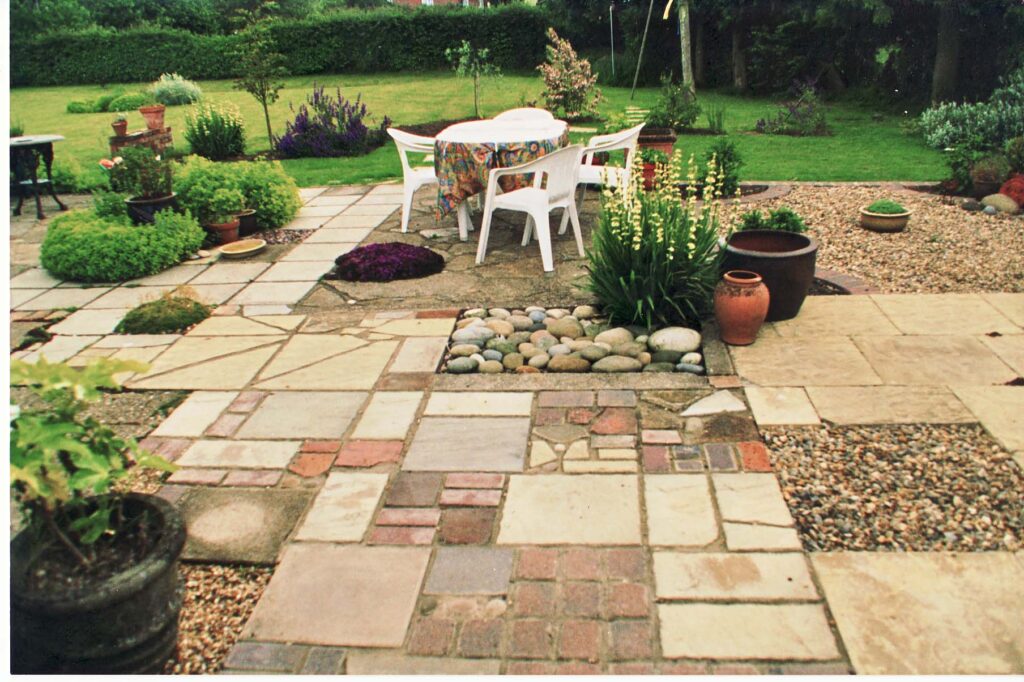
Art manifests itself in many forms: I would never consider myself a gardener or garden designer. I have no in-depth knowledge of plants, landscape design or propagation. I have never grown vegetables or fruit and have no interest in having a perfect lawn. My main interest in plants is their colour and how big they will grow. Despite this, I love gardens and have painted many – not the perfectly manicured sort but the small intimate spaces where plants play off against hard structure, where the shadows cast by them are as important as the plants themselves. I prefer it when things are slightly broken or uneven; old steps, crumbling walls, pots, weathered statues – the atmosphere created by the patina of life.
There have been times however, when I have been forced to confront the prospect of creating a garden and for that I fell back on my skills as a graphic designer, my love of pattern and experience as a painter – playing off one colour against another and using the negative spaces (the spaces between objects) with equal importance as the positive ones.
It seems to be the lot of an artist to be always short of money. And so it was many years ago when my wife and I decided to radically change our lives – it was time for me we felt, to pursue painting as a full time career! We had bought a redundant pig farm near the north Norfolk coast and planned to convert the many outbuildings into a gallery and painting workshops. But, before we could consider tackling any of that a more pressing problem presented itself when we tried to set up a table and chairs outside in the garden to have a cup of tea. There was not a single flat surface to be found! The table tipped one way and all of the chairs tipped in different directions no matter where we placed them. We had not set a budget for the garden and there were more pressing problems – so, what to do?
I had noticed that in a field on the other side of a lane that ran down the side of the house there appeared to be a pile of broken concrete which I assumed was once the floor of a small barn the farmer had demolished. I asked him if he needed them and he said no, he was glad to see the back of them. I don’t know how I managed it but I somehow man-handled the lumps of concrete over the hedge, across the lane and into our garden and set about resetting them in the form of crazy paving (they are the area under the white table and chairs in the picture above where the paving changes colour). That simple change of direction set in motion a complete transformation of the garden. The property had not been used as a pig farm for many years, the owner was elderly, and everything neglected. What it did have however, was lots of rubble, blocks, broken paving and bricks. This was my palette, and with this, the washing line prop, a spirit level and a ball of string I set about remodeling the entire area around the house.
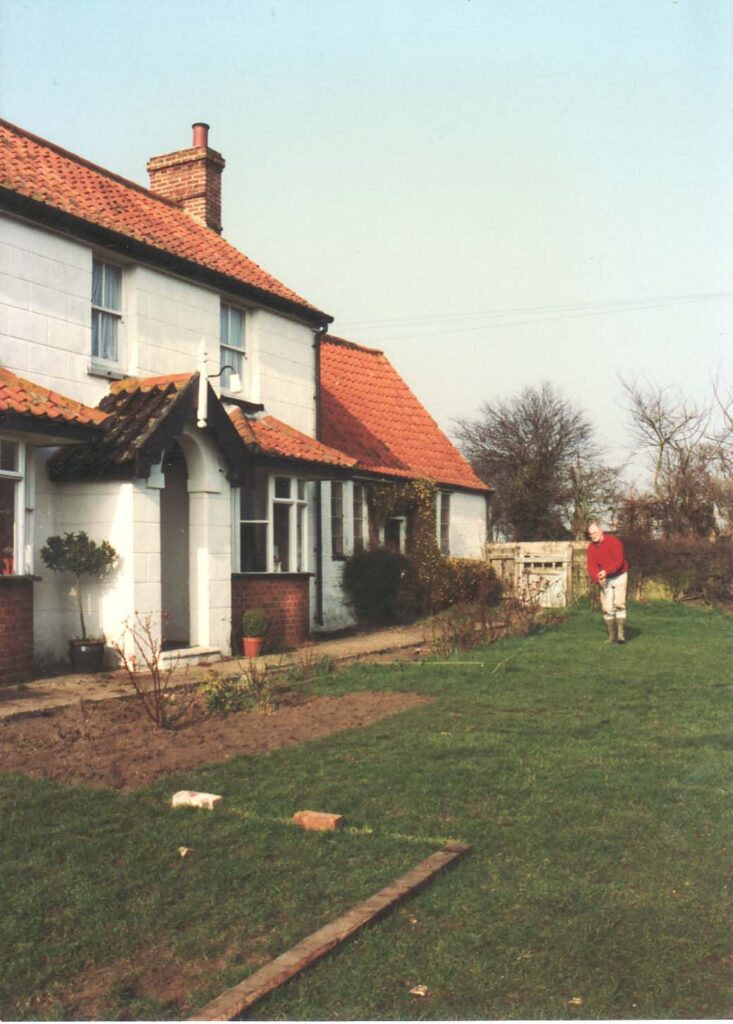
Above: Finding my levels with a ball of string.
The house was a little unusual in so much as one approached it from the rear, the consequence of which was the first thing to greet visitors was the old piggeries on the other side of the yard which were not very attractive. For reasons of expediency I decided the best thing to do was camouflage them by burying them under as much foliage as possible. History helped me here because, after years of pig droppings the soil around the piggeries was so rich everything took off like a space rocket! I decided to return to the yard area at the back of the house at a later date as I still had to resolve the problems of the uneven surface at the front.
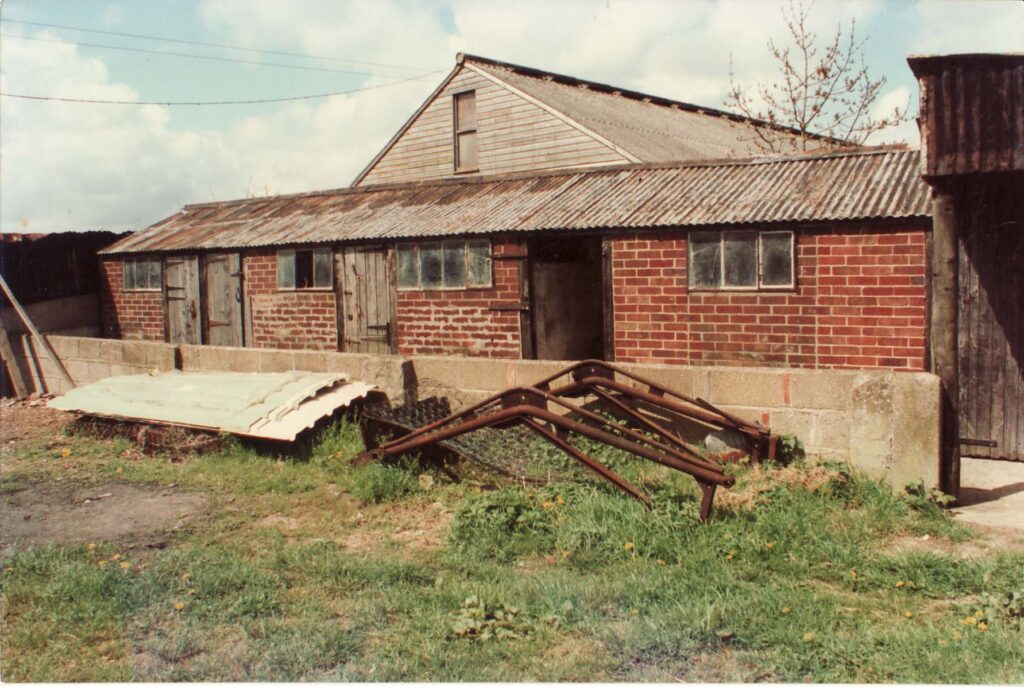
Above: The old piggeries before.
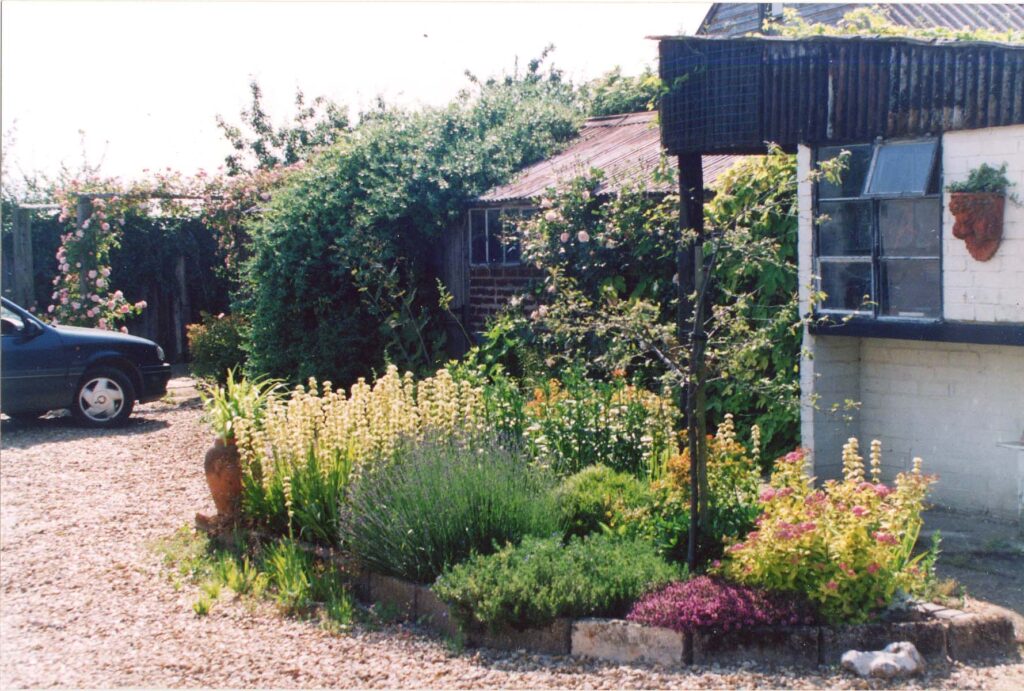
Above: The old piggeries after.
The area I had laid with the broken floor from the demolished barn was a little way out from the house so I needed to link the two in some way. I bought a few slabs and gathered around me a collection of old bricks broken slabs, large pebbles and decided to approach it as if it was an abstract painting by tackling a small area at a time, standing back and looking at the shape of the area that was left (the negative space) and repeating the process. In this way I worked my way across the front of the house in stages, making it up as I went along using whatever materials I had to hand and infilling with new slabs and gravel where it was needed. I also infilled from time to time with brushed concrete, a technique I had discovered from a wonderful little booklet published by the Cement and Concrete Association in the early 1970’s which I had kept.
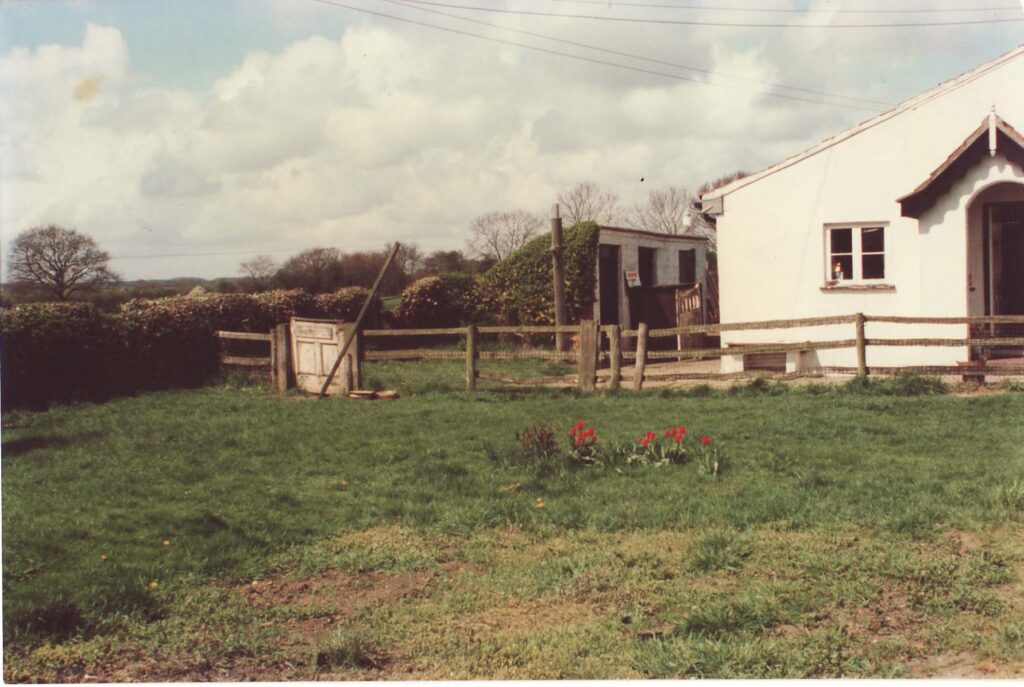
Above: A small section of the front of the house before.
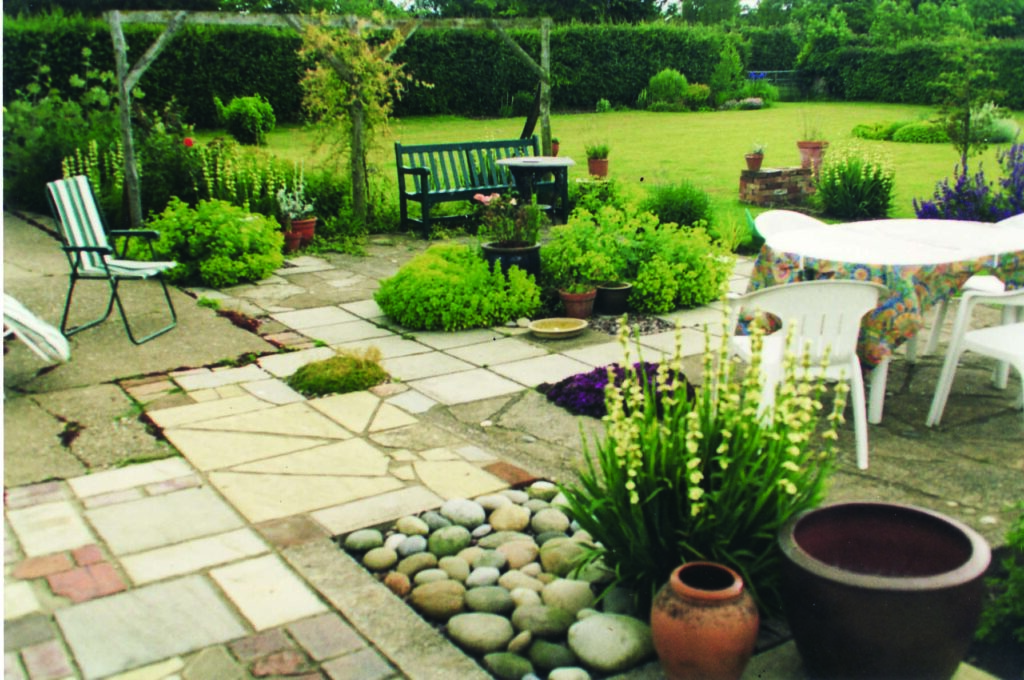
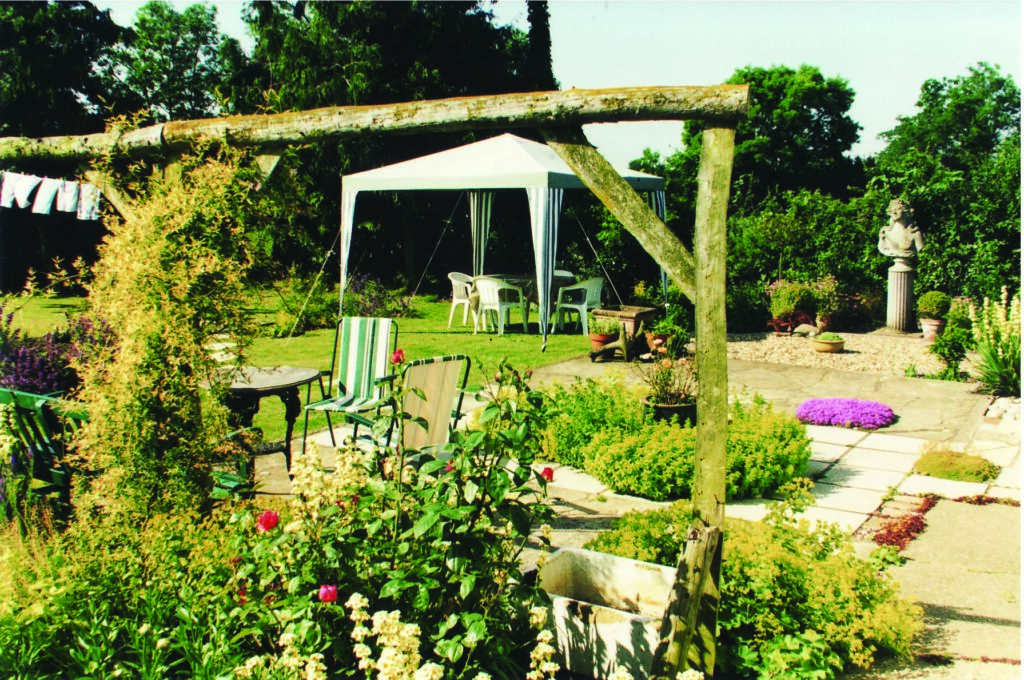
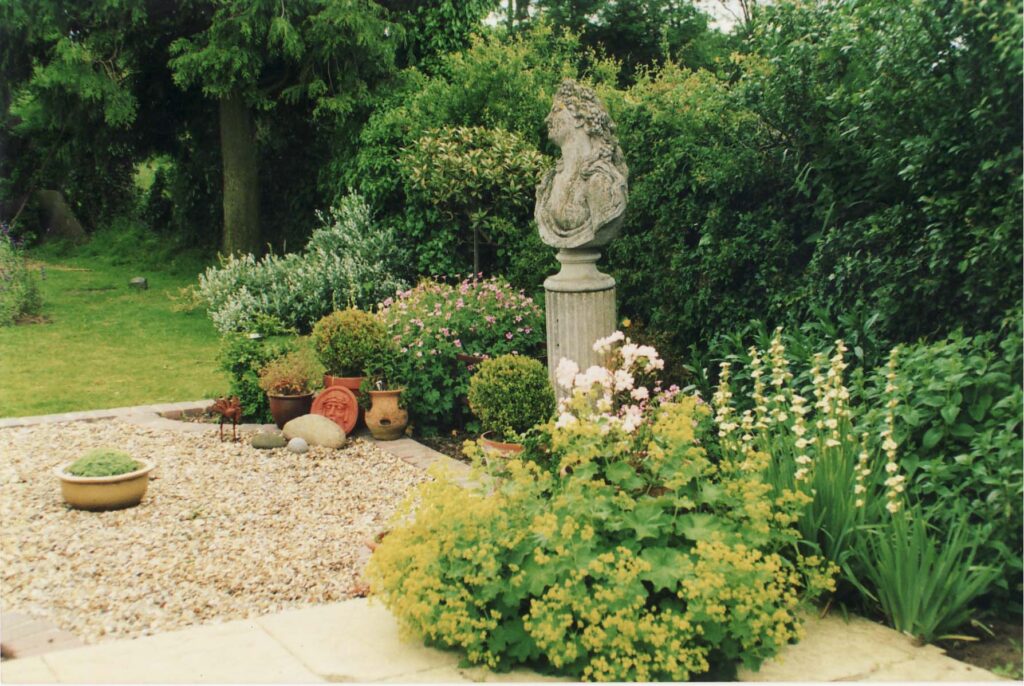
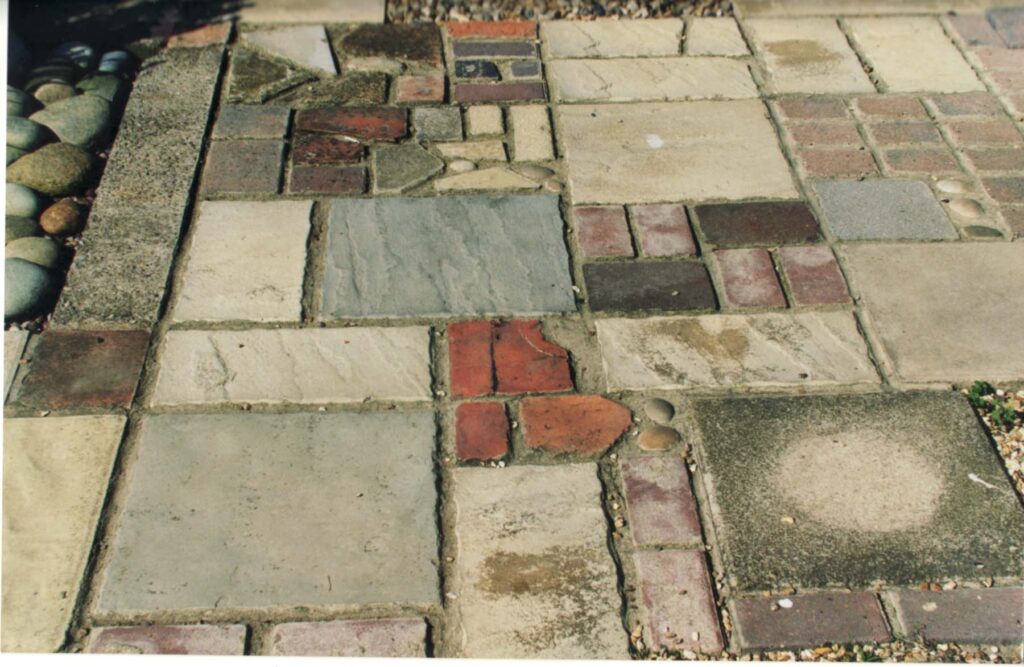
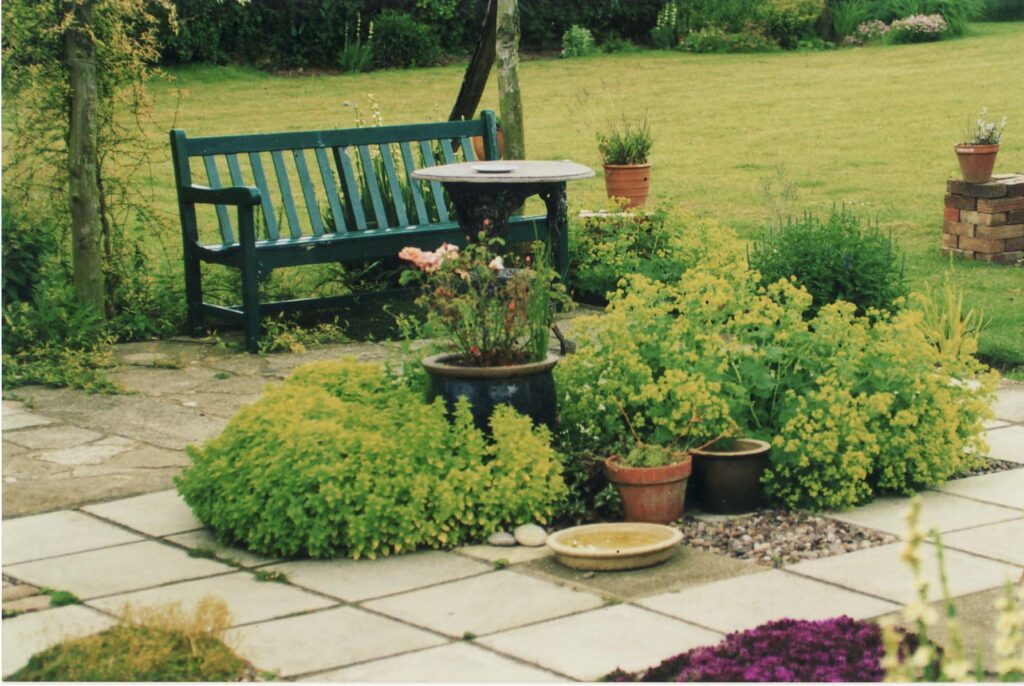
Above: A series of photos showing the front of the house after. It’s amazing what you can do with a washing line prop, a spirit level and a ball of string!
It was time to return to the area at the back of the house. I knocked down some low walls and using some wood left lying around made an arbour and planted some climbing roses. The previous owners used to break up palettes in this area to burn on the fire so the ground was littered with nails. I had several punctures in a short space of time so I got a digger in, leveled the ground and had a ton of gravel put down. The only thing left to do was sort out the entrance to the barn attached to the side of the house which was to become my studio and here, history had a part to play again! Inside one of the small piggeries a door had been laid on its side to act as a divider between the stalls. The pigs used this over decades to scratch themselves against and had worn the wood away to a beautiful patina leaving waves in the wood no hand of man could reproduce! I designed a frame to go around this with some glass to let the light in and had it installed to replace the old door that was there before. Job done, it was time to get back to sorting the house out.
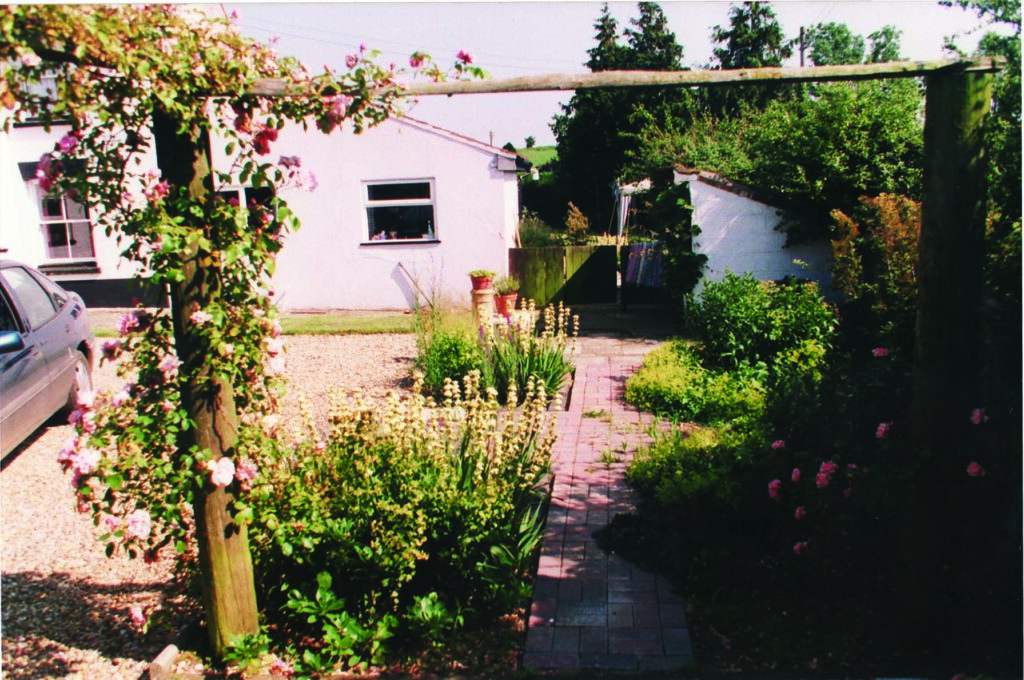
Above: Finishing off the yard at the back of the house.
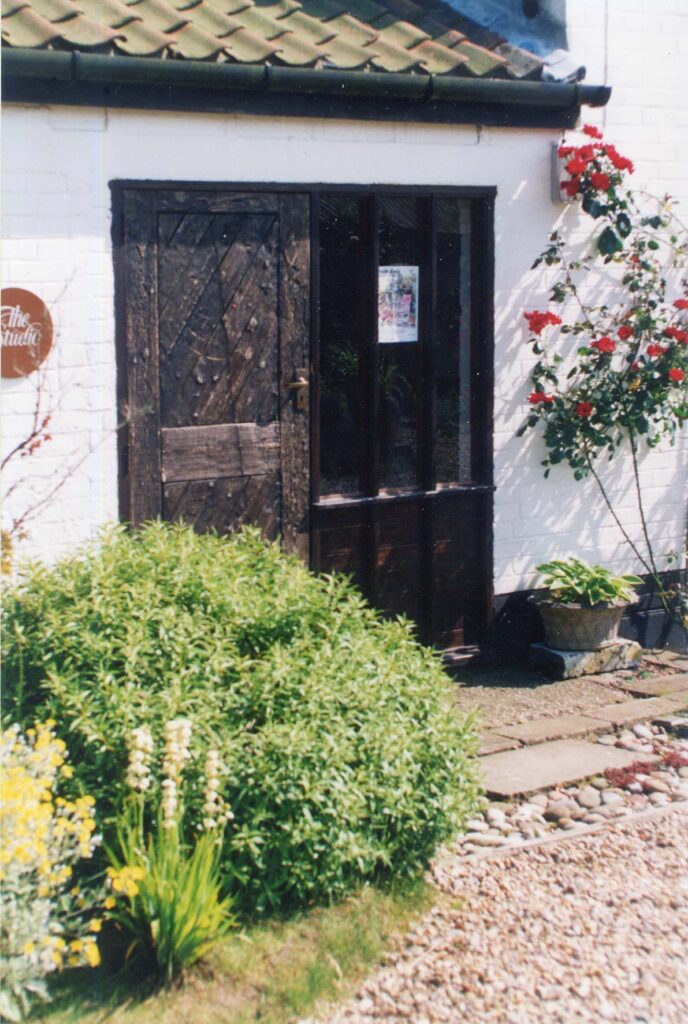
Above: The entrance to the studio at the side of the house with the door molded into waves by the pigs scratching themselves against it over decades.
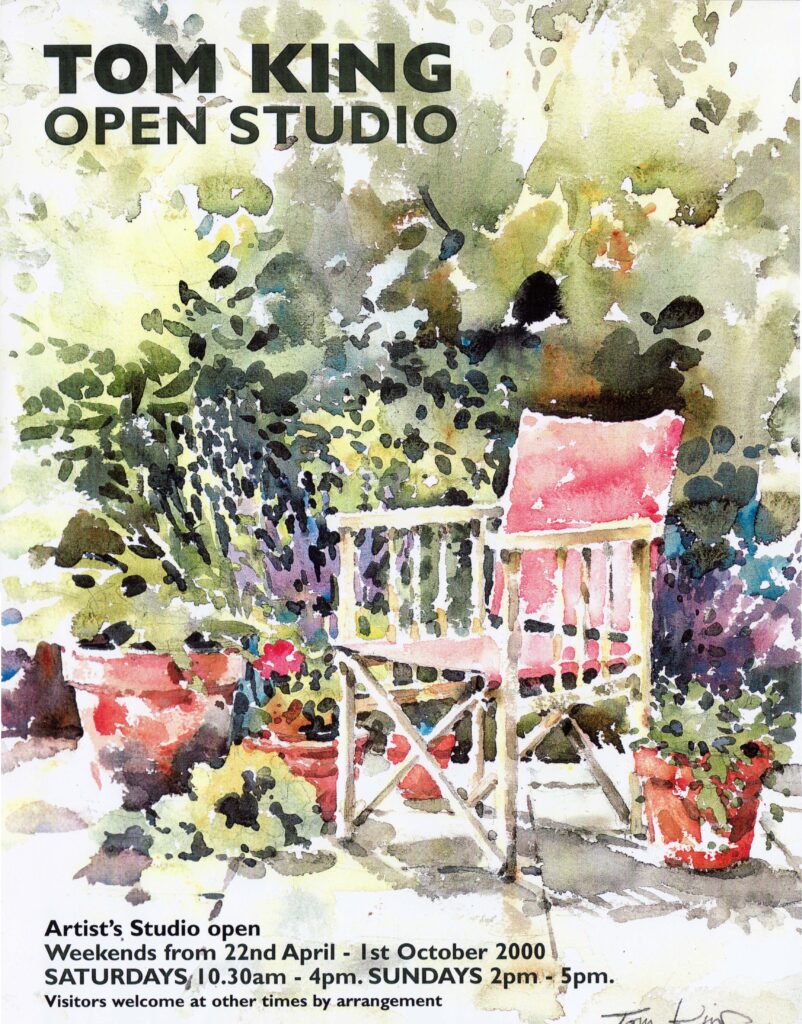
Over time I used the garden to promote my work.
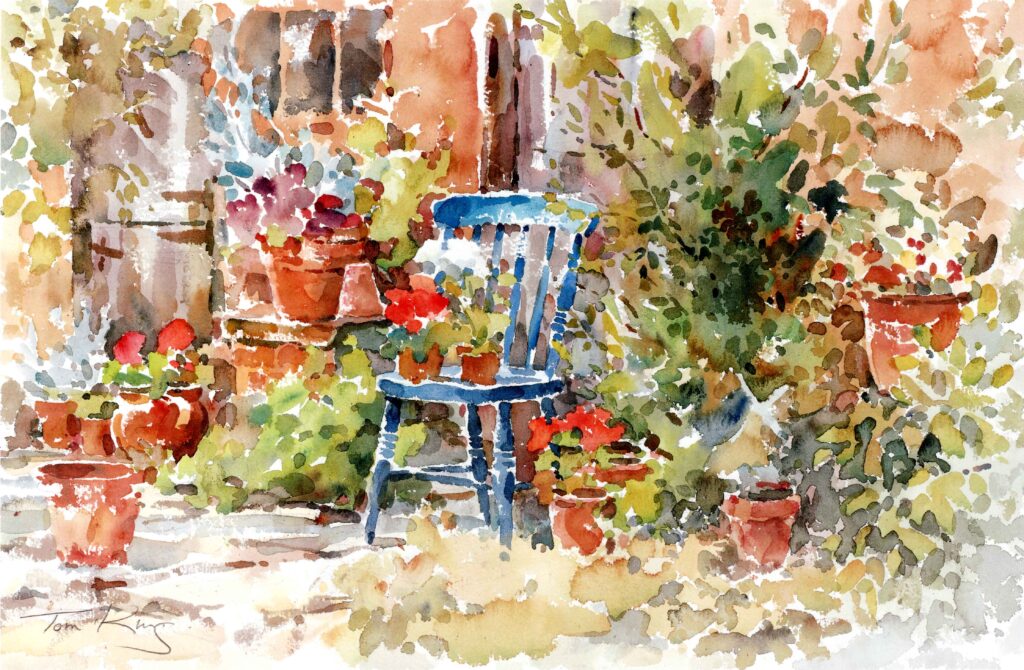
Above: a watercolour made of the piggeries after I smothered them in foliage. It was only later I realised that when I had been planning the garden I had been looking at each area as if through a frame.
2. My Studio
24 – 06 – 2026
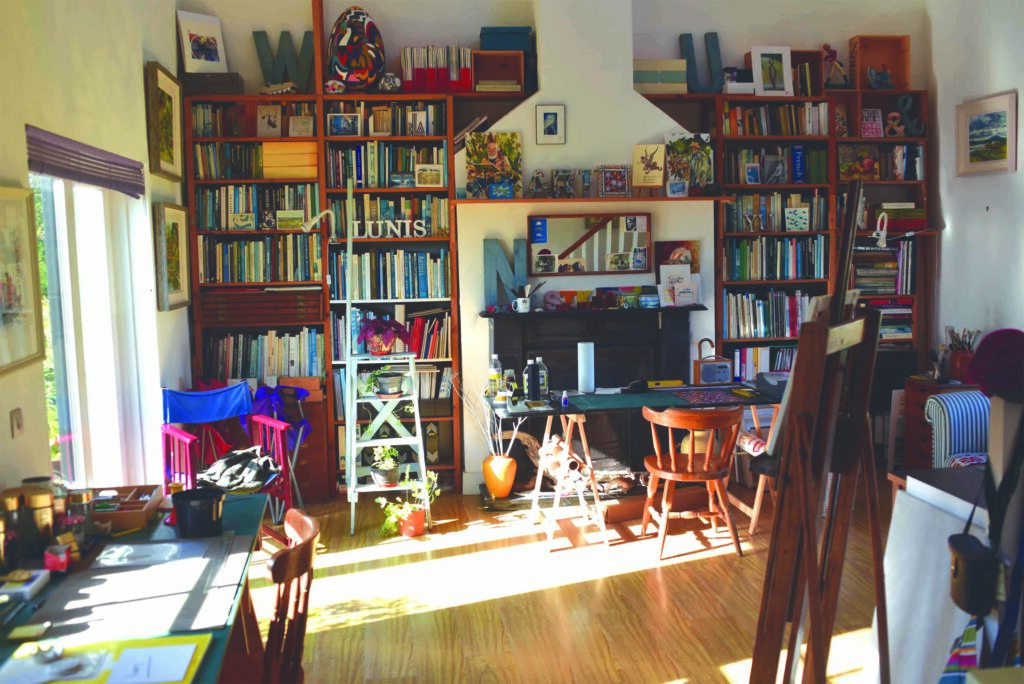
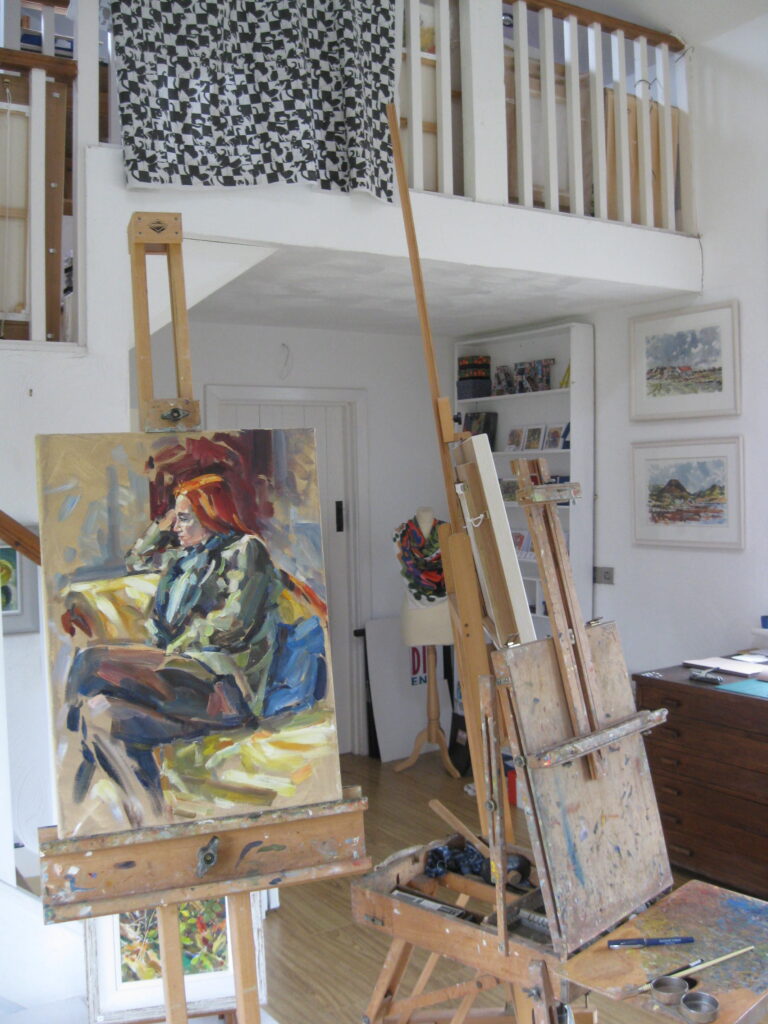
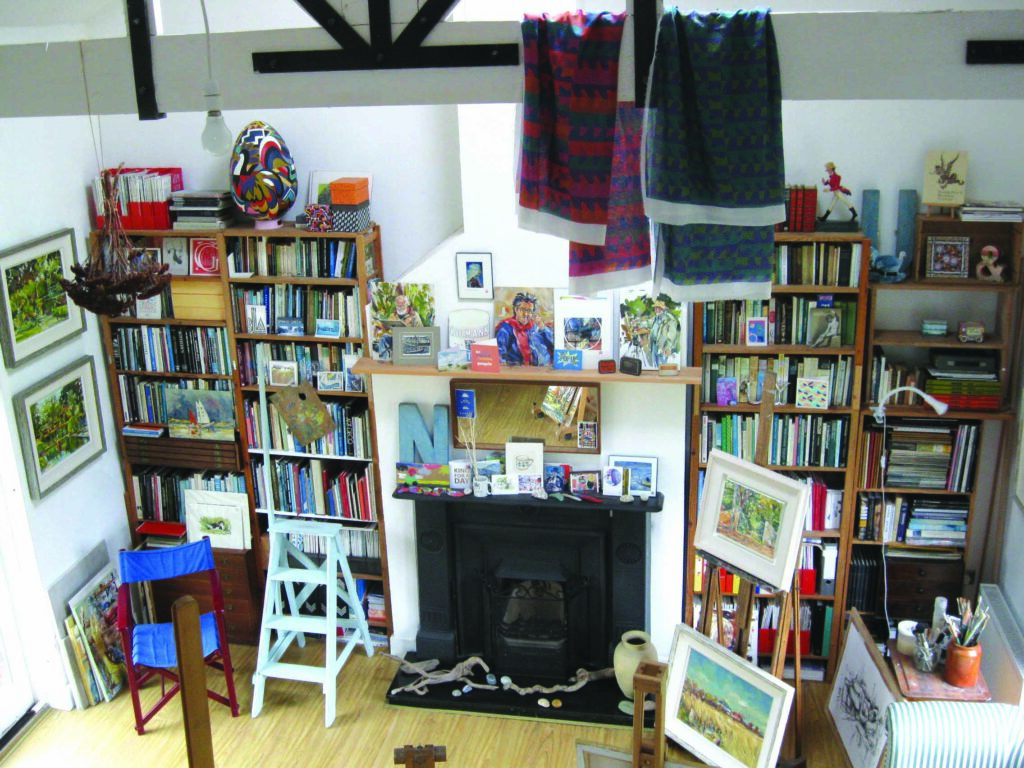
I have always liked work spaces. I like the way they reflect the activity of their owners, the way they evolve and change over time with the emphasis on function not appearance and yet, many turn out to be full of character and interest. My own workspace, my studio, is no exception. It is a place of production, contemplation and creativity. It moves through these various stages changing its mood as my eclectic brain jumps from one project to another.
My studio is filled with all sorts of things that interest me and stimulate my restless mind. Nobody makes me walk across the courtyard to my studio every day but when I slide back the door in the morning it’s like stepping into a comfortable pair of shoes, it is my space and almost everything in it has been created by me. In a world where many people spend their working days as part of a process, a cog in a wheel, I consider myself privileged to be able to start and finish a project within these four walls and take pleasure in looking at the results. Each day is filled with possibilities.
My working life for many years was in graphic design and it is through this that I developed an interest in typography, letter forms, fine printing, pattern design and the applied arts. I have met some renowned people in these areas and was fortunate to work for clients whose products had a close connection to the arts. Later, when I became a full time painter, I retained my interest in all these things.
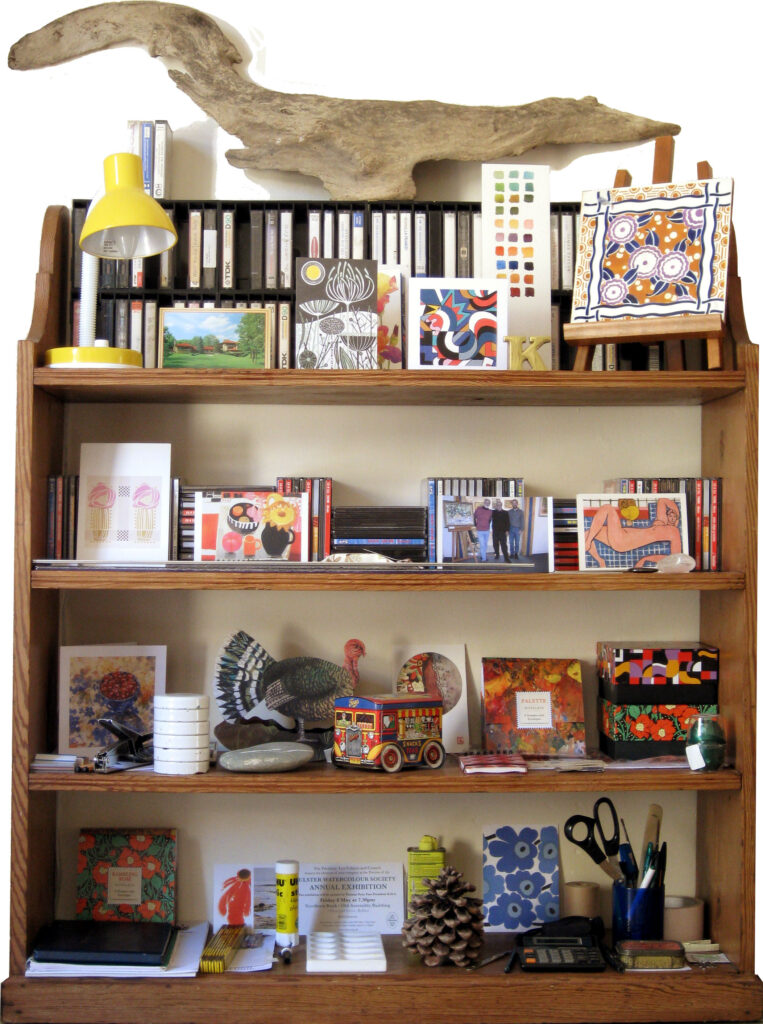
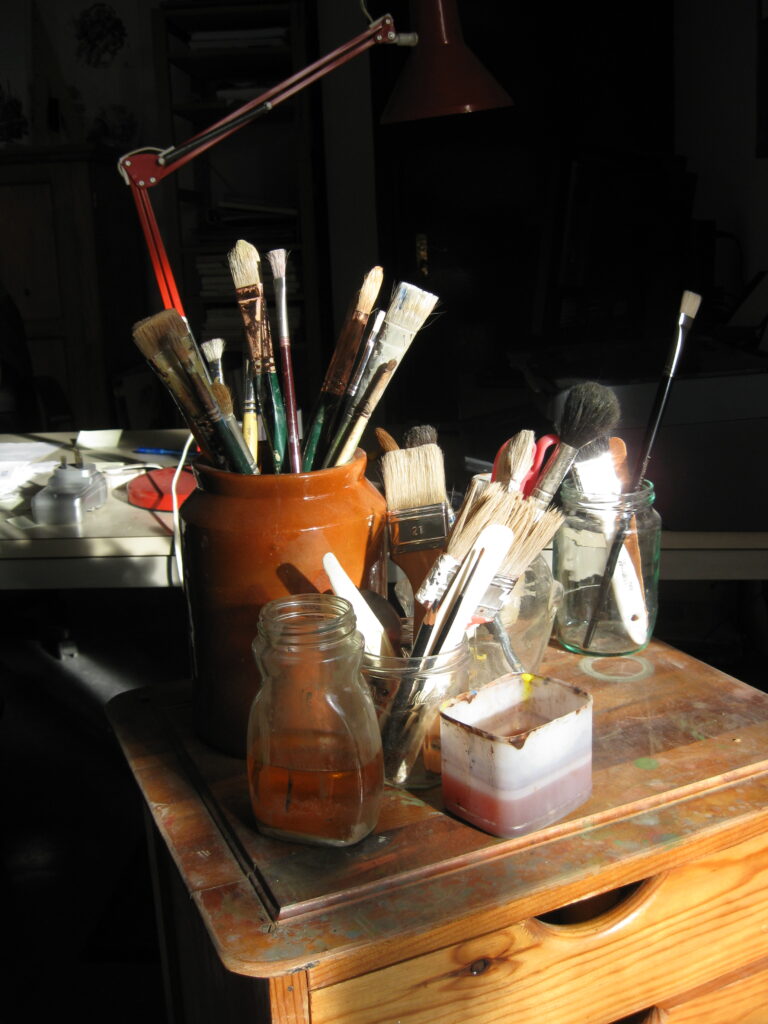
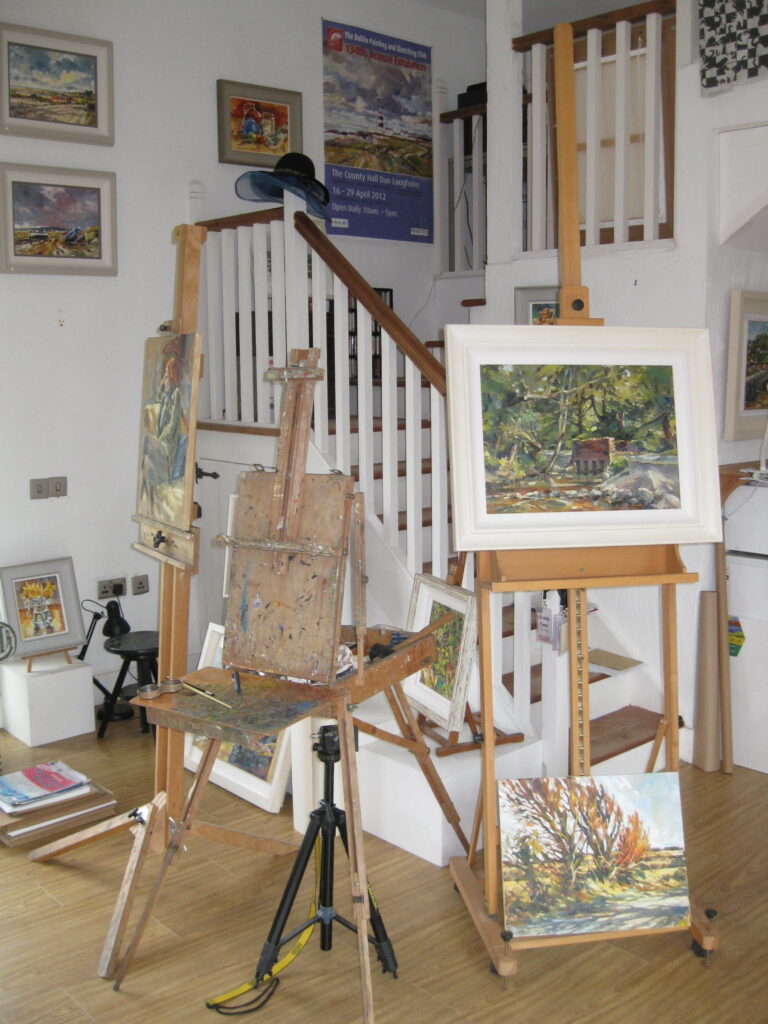
My work routine goes through phases. The summer months are mainly devoted to painting activities, as I work outside to paint, and the winter months are admin. This can involve writing, designing, work on the computer, keeping a data base of my paintings up to date or dealing with printers. I have a mezzanine in the studio and the computer is upstairs so it is very cosy in the winter. I also scan or copy my paintings during this time for my data base. I like to have the original paintings beside me as I do this to colour match them as near as possible to the results on the computer. Having a visual record of my work is important for exhibitions, publicity, my website or any printed material I wish to produce.
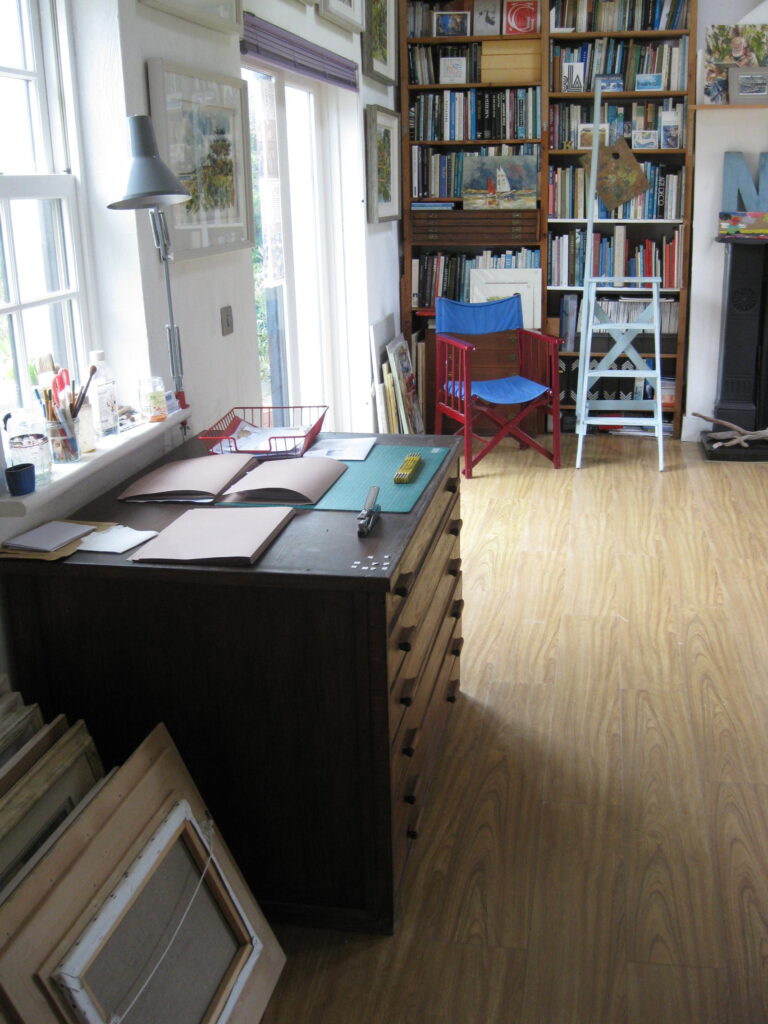
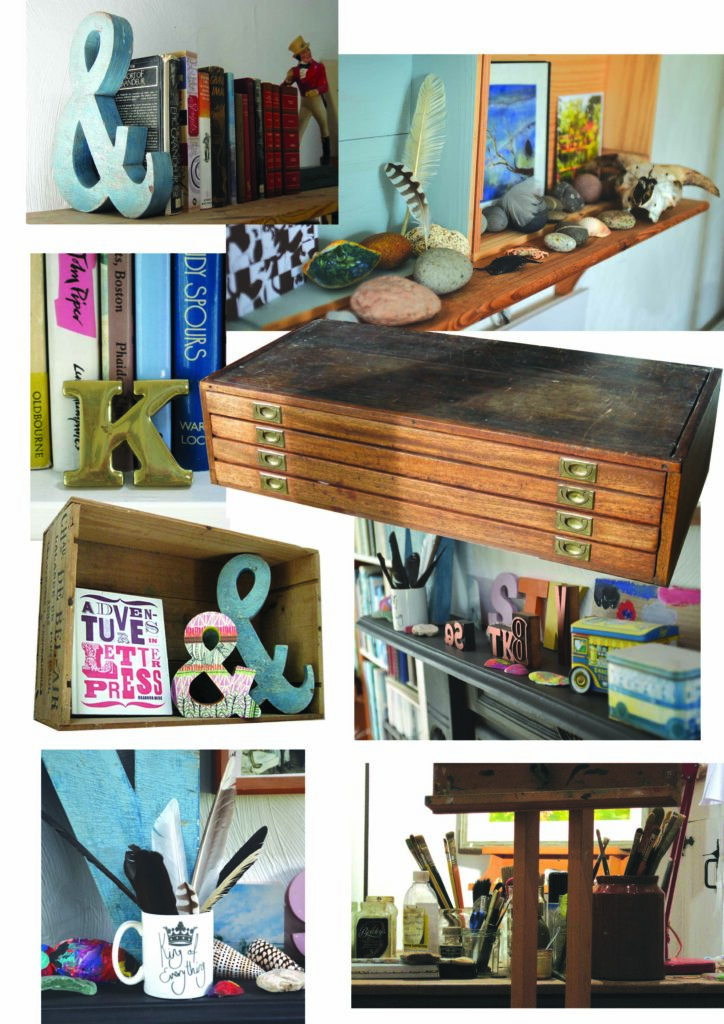
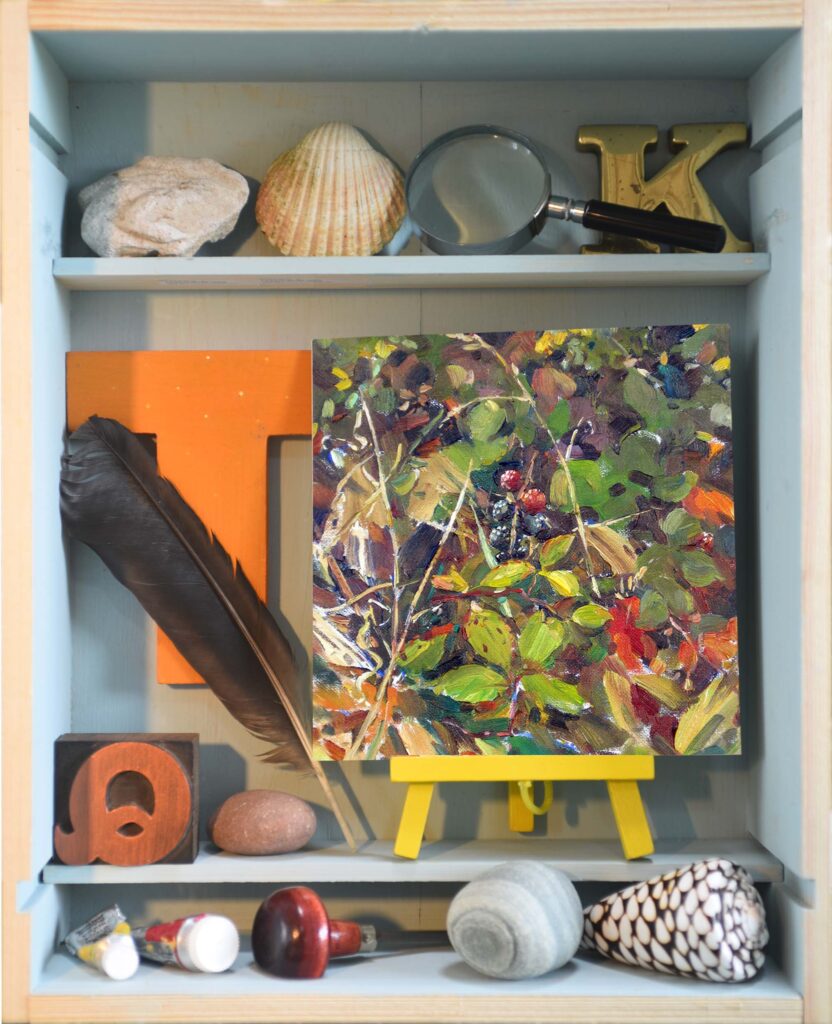
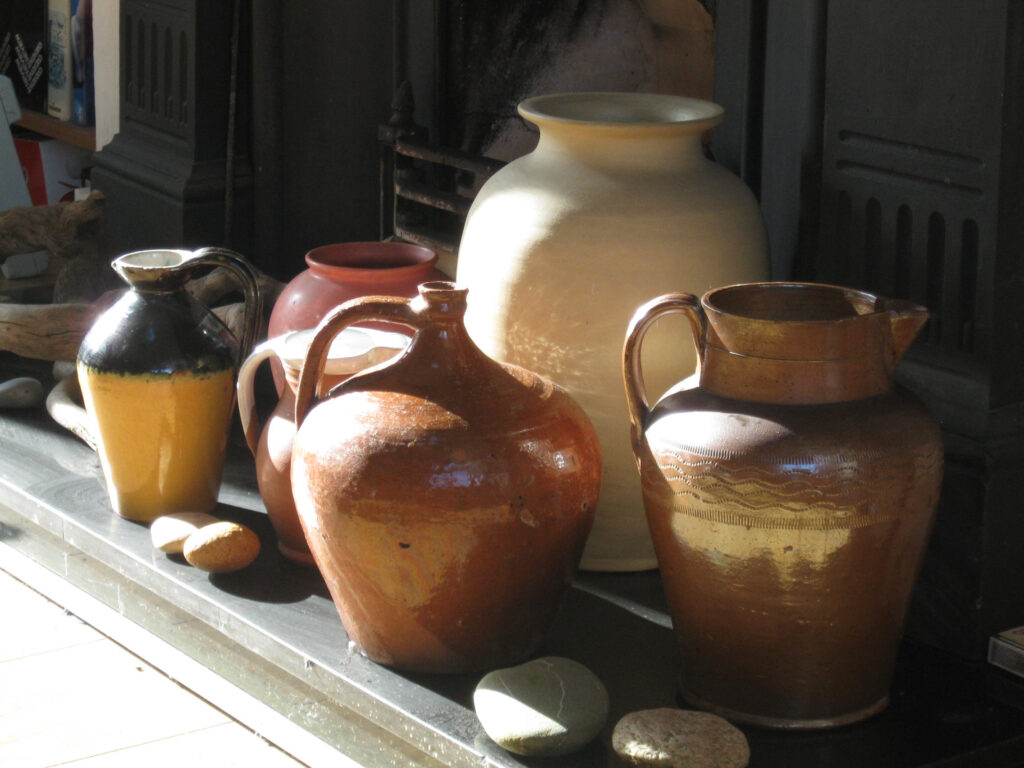
I surround myself with things I find on the beach, in the fields or in junk shops. Driftwood, shells, interesting rocks. Old (antique) studio equipment, wooden letters from the days of letterpress printing all go into the mix of making the studio an interesting place to work. The collection of pots below was acquired over many years as props for paintings; they come from France, the UK and Ireland. Many of these things cost nothing, those that did, cost very little. Perhaps my most treasured possession is my collection of books. They were built up over many years and many are now long out of print. They cover all aspects of painting, the applied arts, design, printing and history of art as well as the history of gardens and garden design. There are boxes full of cuttings from magazines and newspapers and lever arch files filled with design ideas and reference material. I have made several attempts to catalogue it all but I give up after a few days. The problem is compounded by the computer which is now also full of reference material growing by the day together with a visual archive of my work. There was a time when I wanted nothing to do with computers; I come from a background when most things were done by hand but the computer has enabled me to bring to fruition many of my design ideas and has added another dimension to my working day. To me it is a tool, it adds something to what I do, it does not take away. Every project still starts with a drawing or scribble; I think with a pencil or a brush in my hand, not a mouse.
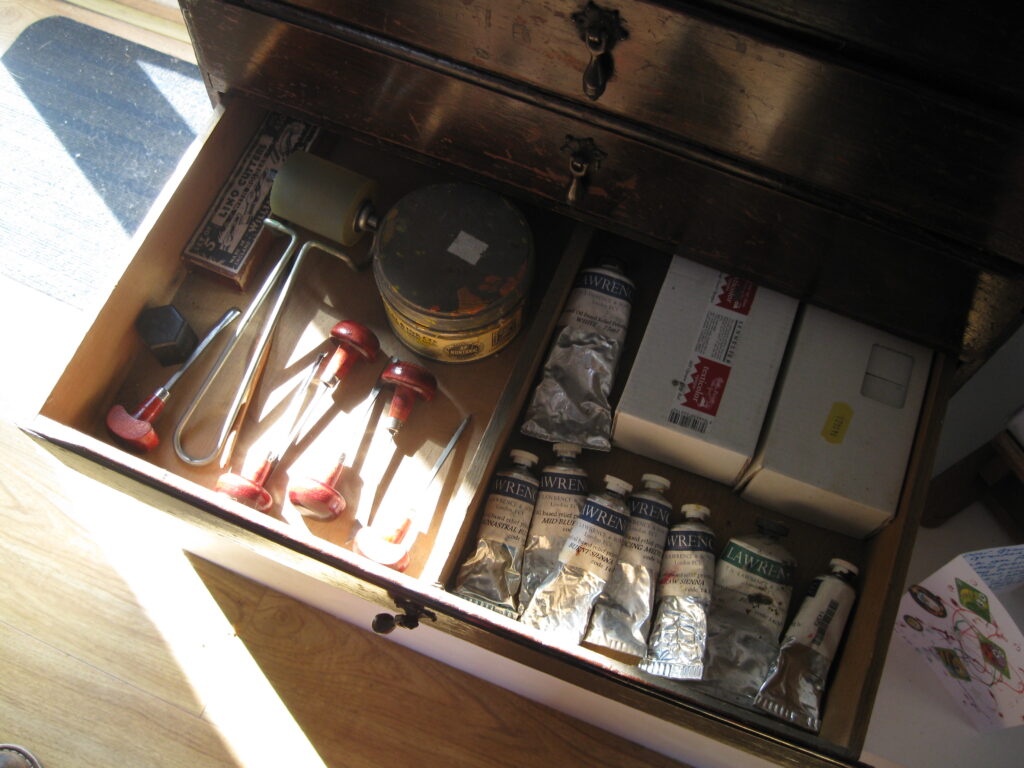
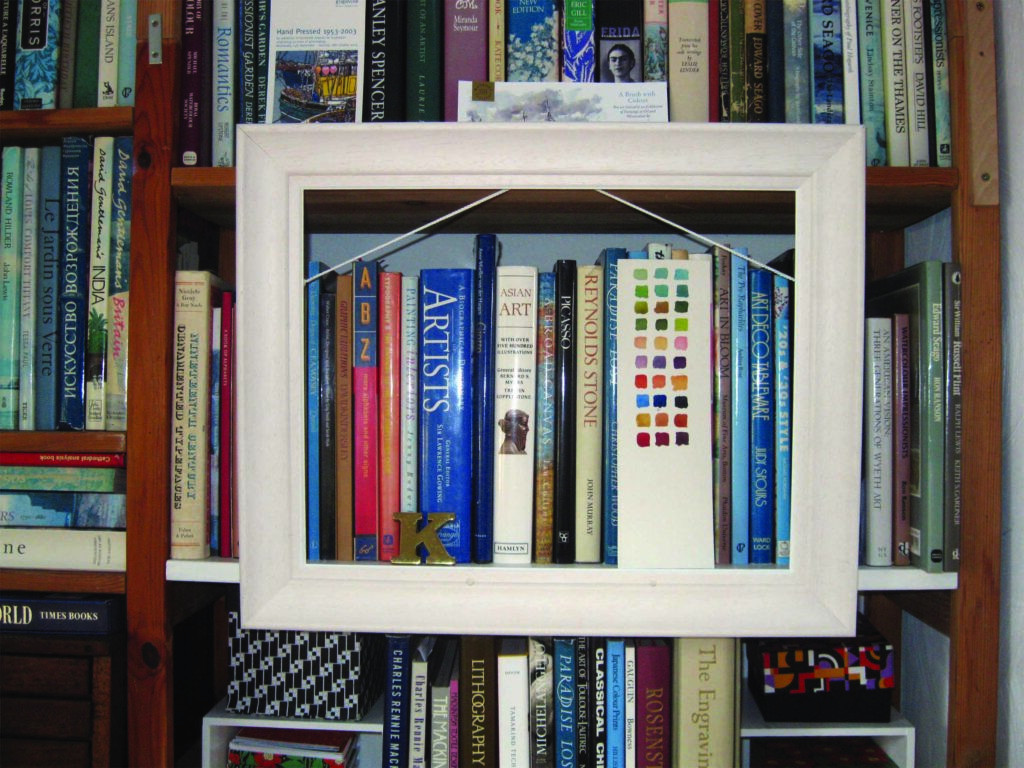
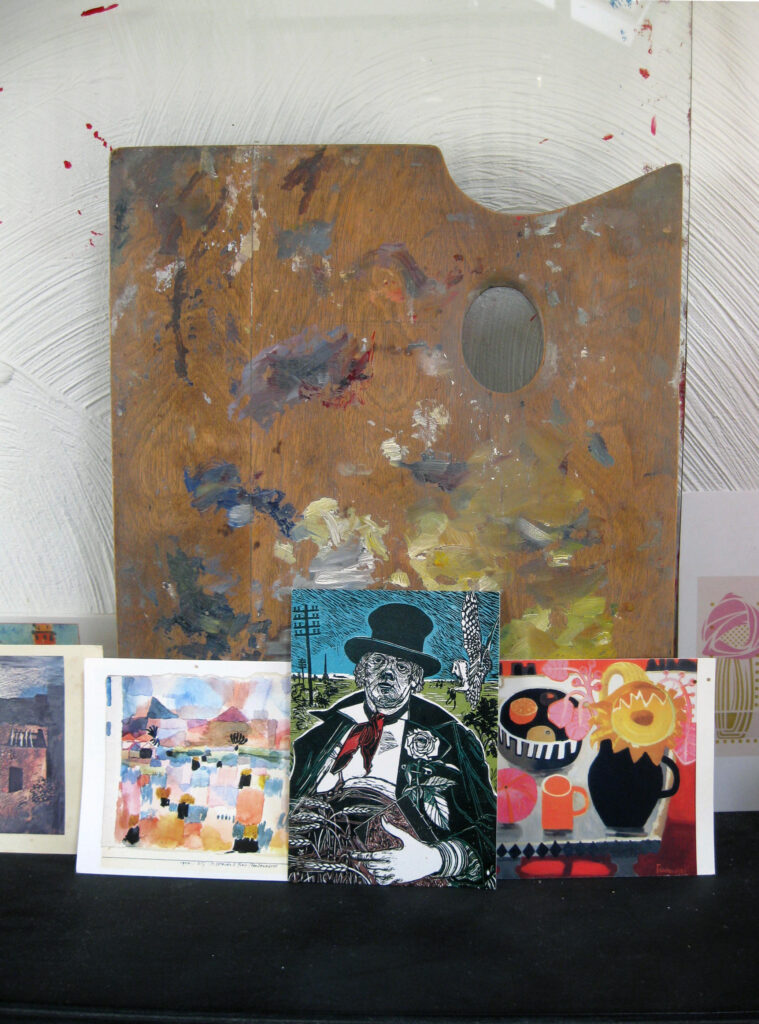
When I lock the door behind me of an evening and make the short walk across to the house I usually take two or three books with me to thumb through while I watch television, or a pad to scribble down ideas. It’s a habit my daughter has inherited from me; she is also a designer. Locking the door is important, it helps me separate work from home. I try to work to a strict routine and keep my domestic life and work life apart but it can be difficult. That short space between the two buildings makes all the difference.
1. Sketching the Wild Side of Life.
25 - 05 - 2026
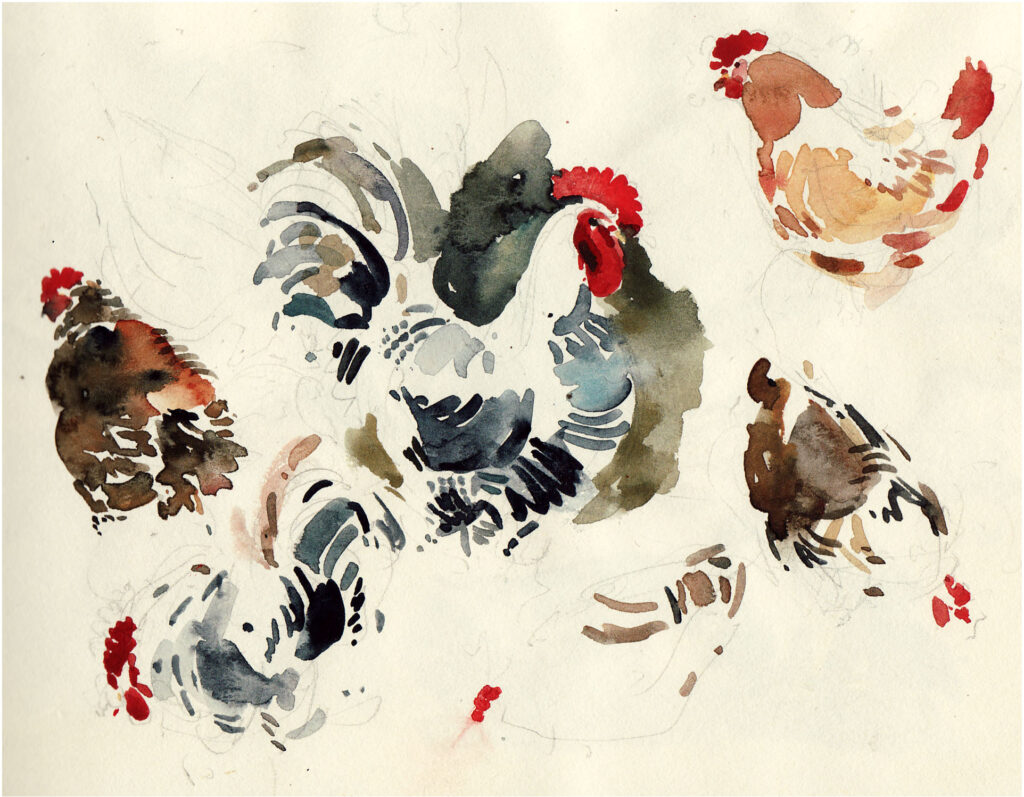
My sketchbooks form an important part of my working life as an artist. They come in all shapes and sizes and are filled with everything and anything that catches my eye or interest. They are a source of reference material, an archive, a data base. In many instances they form the basis of paintings though I always find it difficult to capture the spontaneity of the original sketch. There is a freedom that comes from the urgency of the moment and the knowledge that if it all goes wrong I can simply turn the page over and start again.
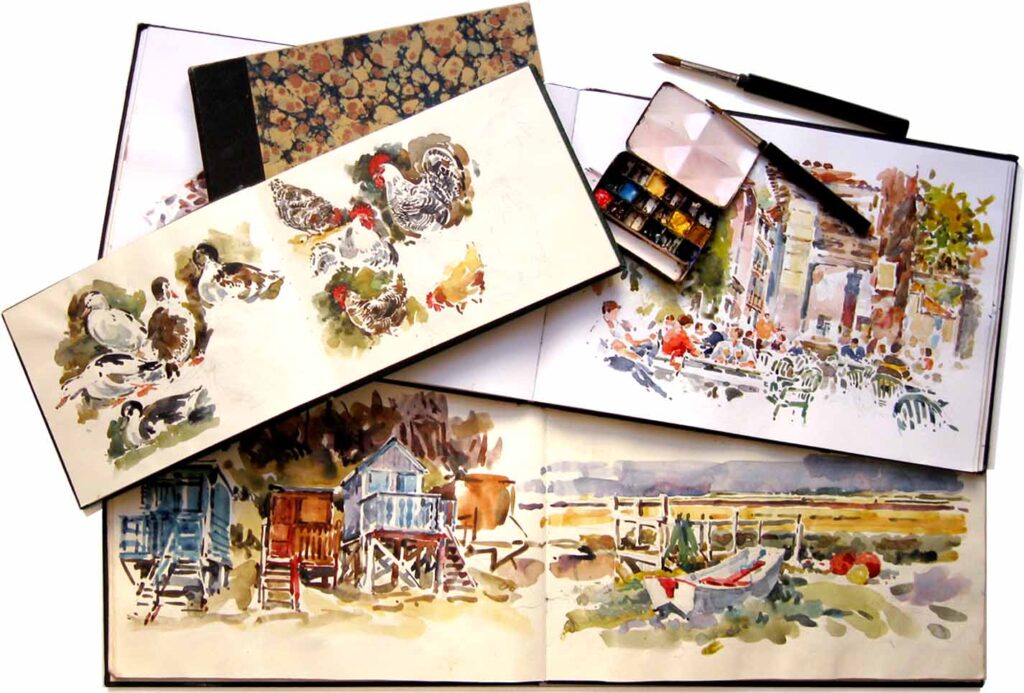
As this is my first post I decided to start with a series of wildlife sketches made several years ago. I am not a wildlife artist but I do like to work from life and when I look back at these sketches they have the feel of Japanese one-stroke brush paintings which pleases me. It comes from the urgency to capture something that will not stand still. The key to sketching animals is to start two or three sketches at the same time. Animals do not like to be stared at and will very quickly begin to display distraction traits. Being able to switch from one sketch to another and back again solves this problem.
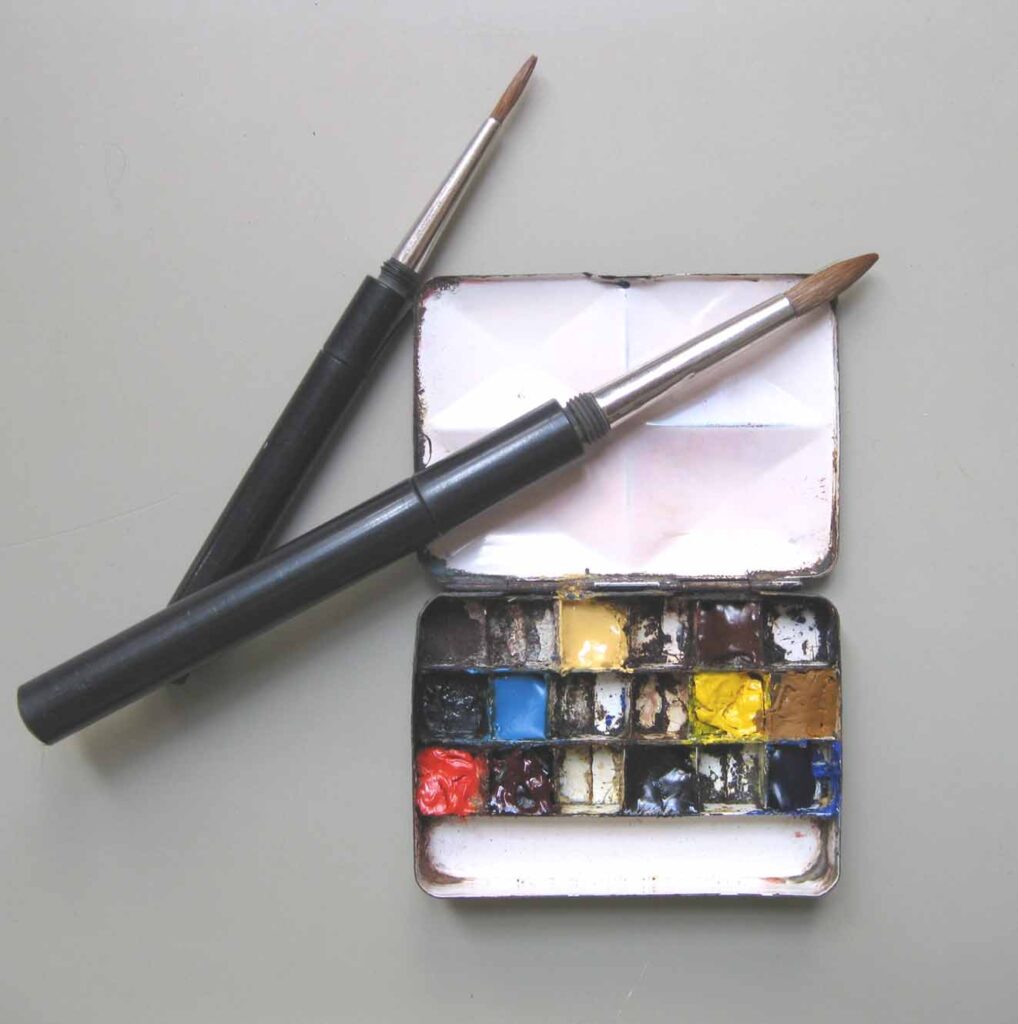
As with all my paintings I work with a very limited palette which helps me get the subject down quickly as I am very familiar with which colours to mix to achieve the one I want. This leaves me free to concentrate on getting an accurate representation of the subject. This is a topic I hope to return to at some time in the future.
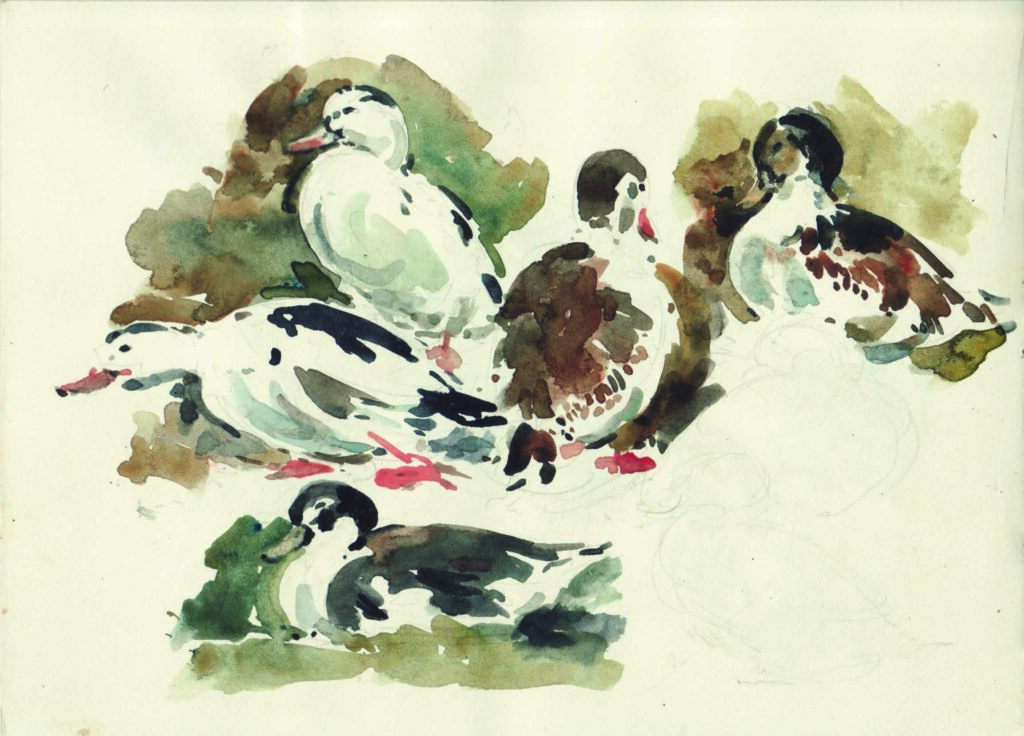
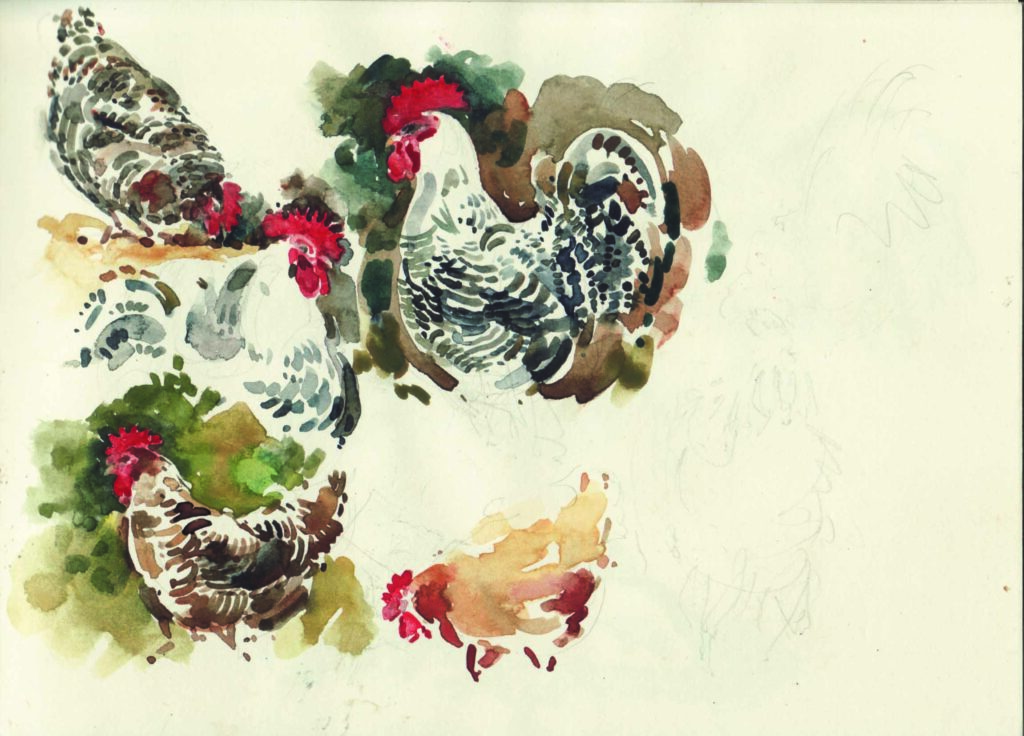
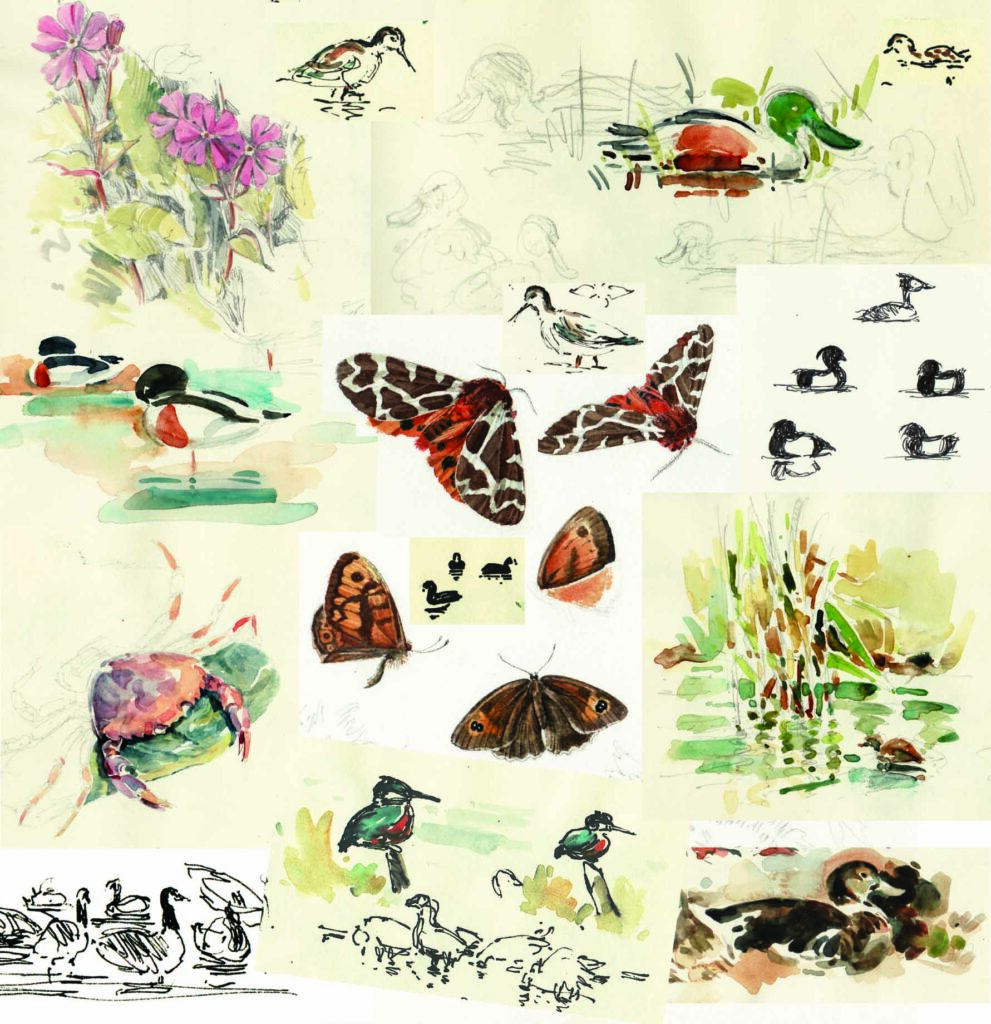
Above: a montage of sketches from several sketchbooks, some very detailed, some not so. Below: I make most of my sketches using a small palette that fits in the palm of my hand together with two collapsible sable brushes. The equipment might be very small but it is of good quality.
From the Studio Shop
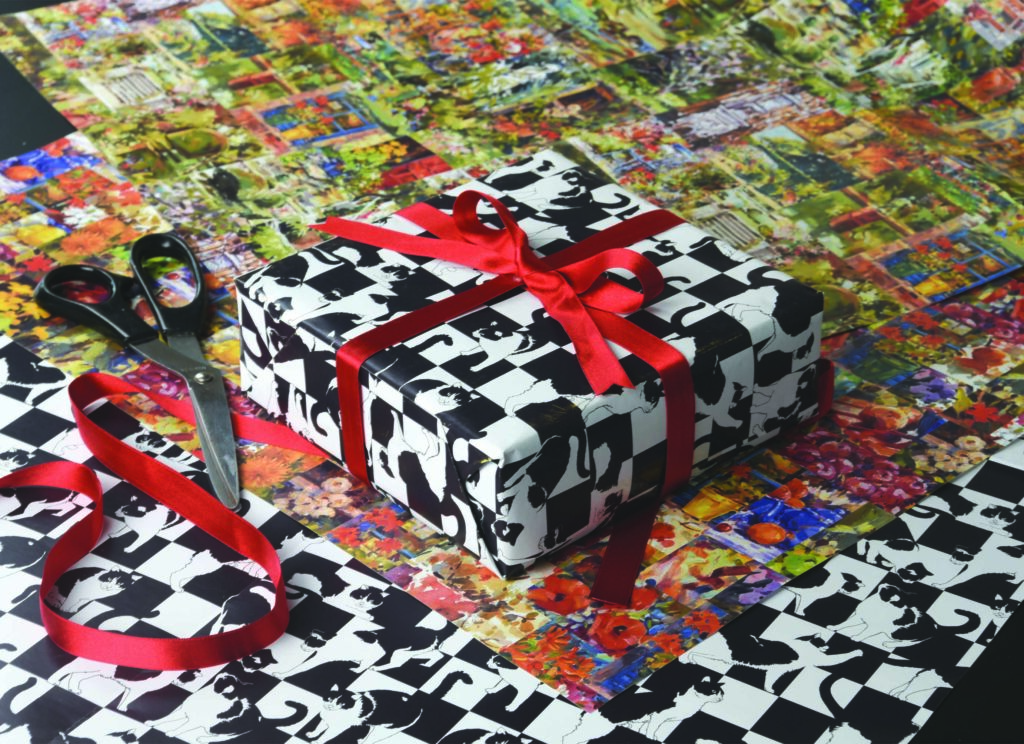
Above: Three Gift Wrap designs derived from Tom’s paintings and designs.
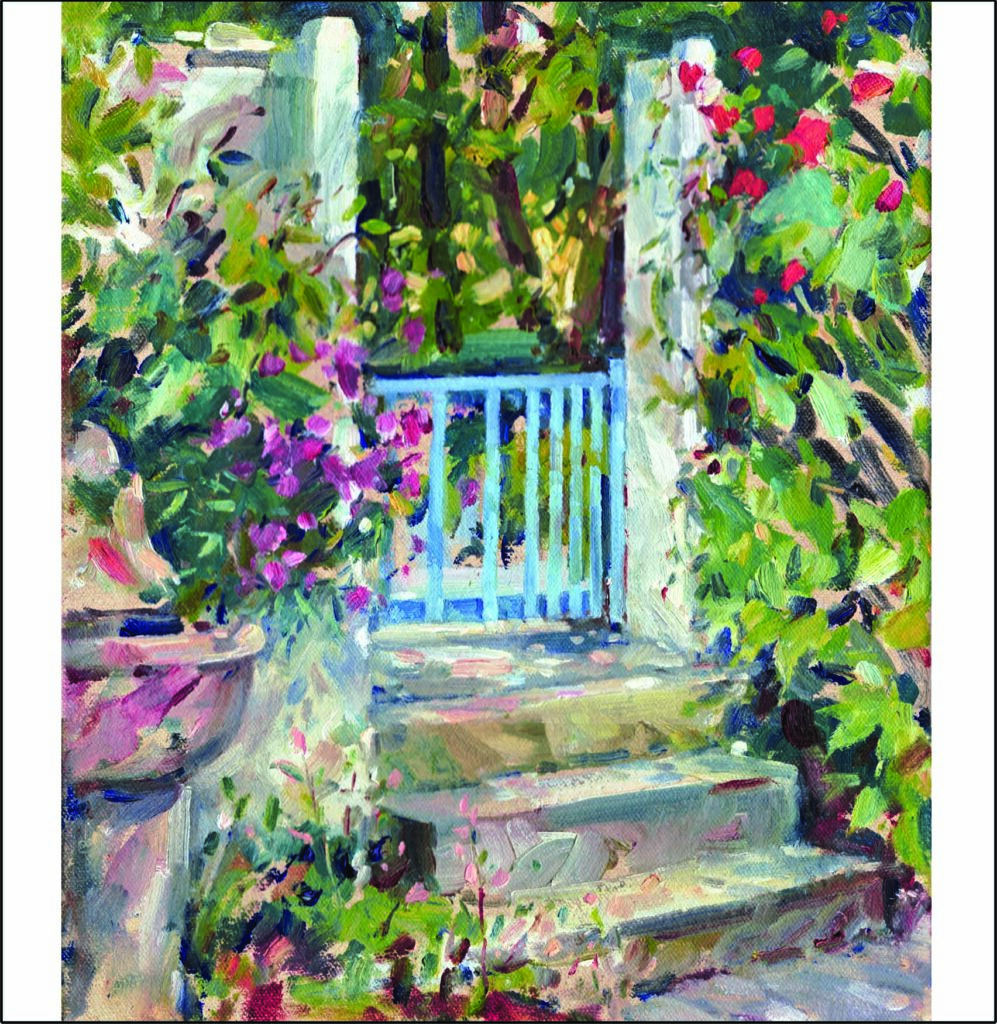
Above: Three Steps to a Blue Gate, my latest Greeting Card, taken from one of my oil paintings.
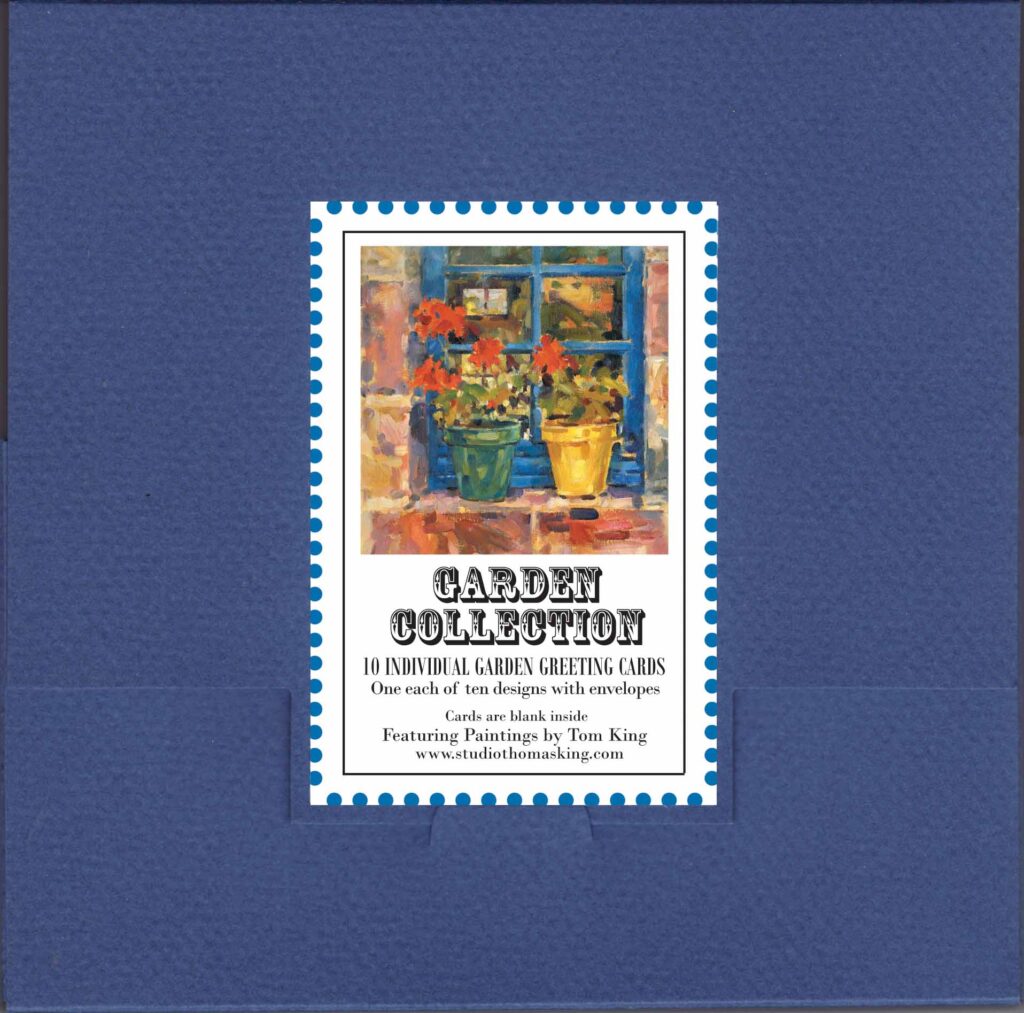
Above: Garden Collection Pochette containing ten Greetings Cards featuring images of my garden paintings.
SYLVESTER