
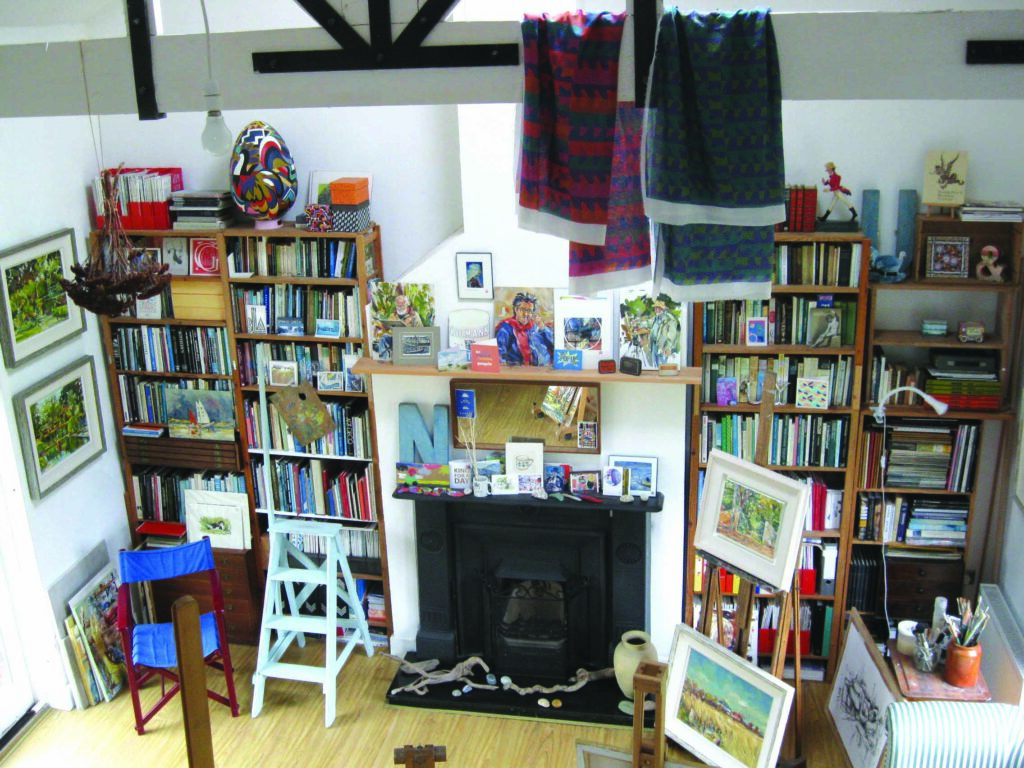
In this blog I hope to share my interests in all aspects of art and design, be it painting, graphic art, applied art, pattern design, a love of letter forms or garden design. I have dabbled in all of these to varying degrees, more often than not, for the sheer pleasure of it, though my main activity is as a painter – welcome to my studio.
24 – 06 – 2026
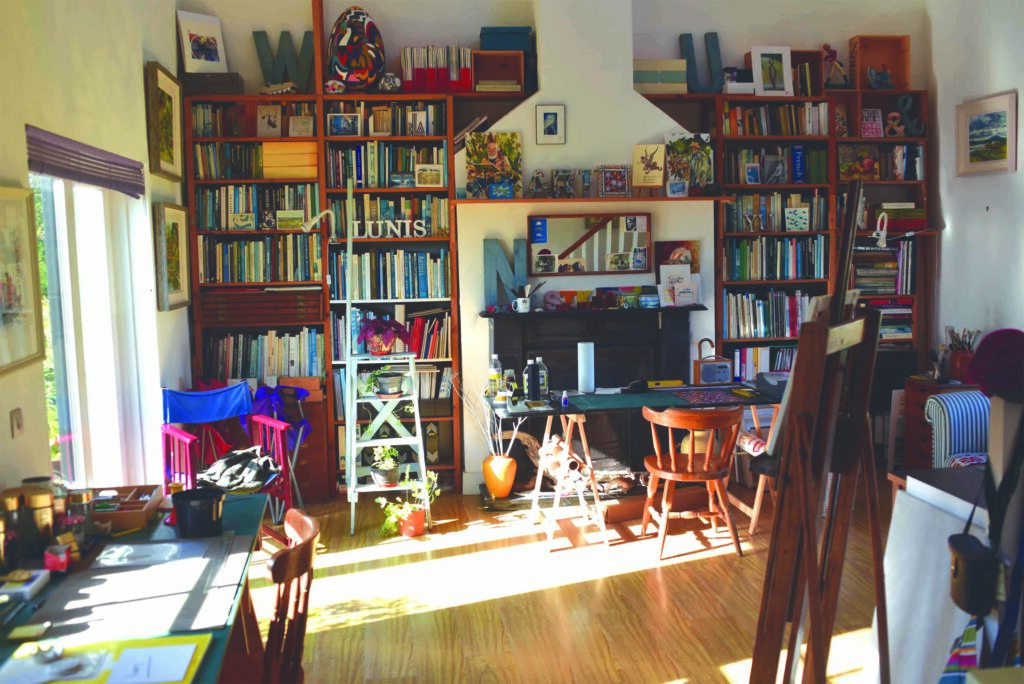
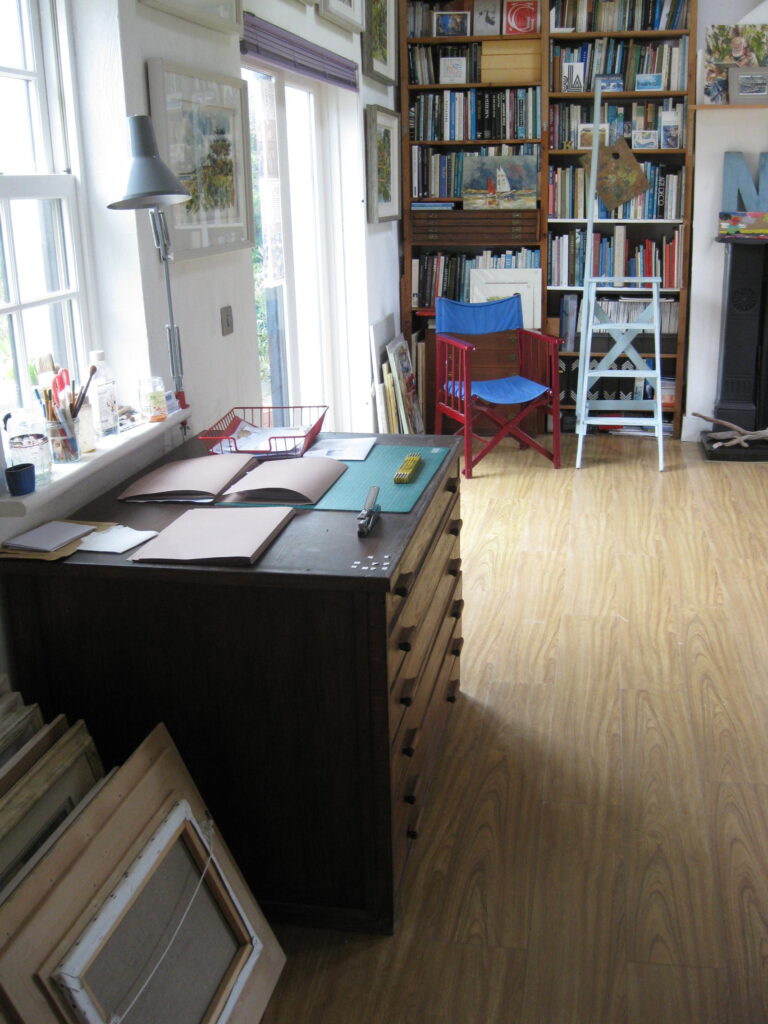
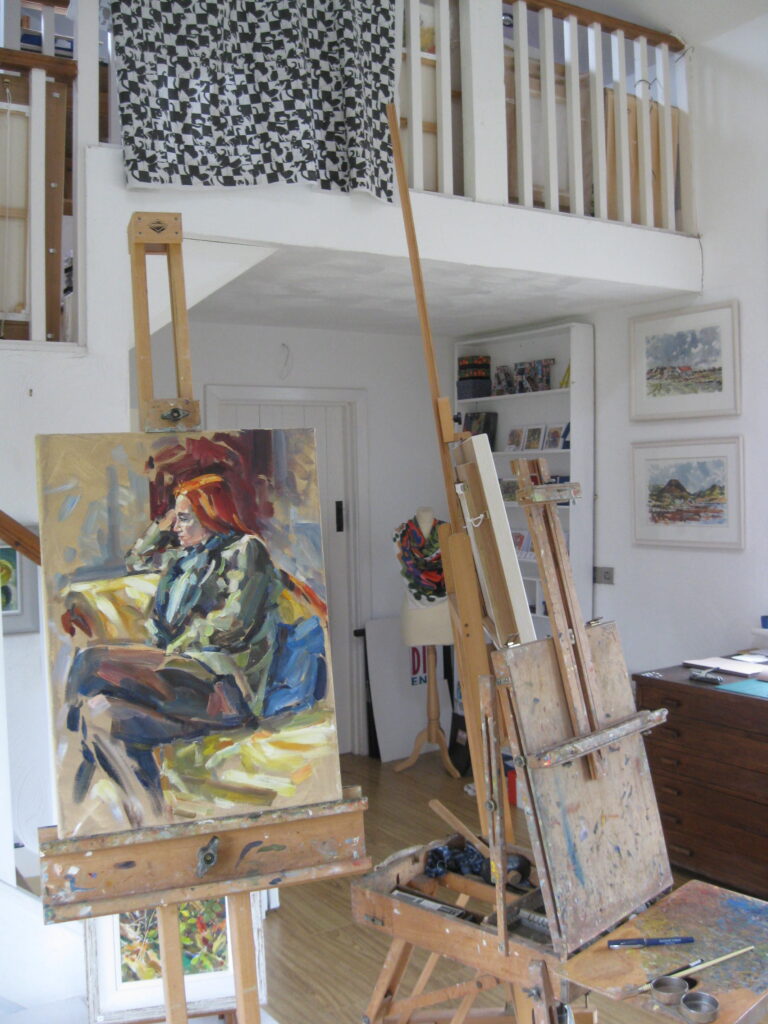
I have always liked work spaces. I like the way they reflect the activity of their owners, the way they evolve and change over time with the emphasis on function not appearance and yet, many turn out to be full of character and interest. My own workspace, my studio, is no exception. It is a place of production, contemplation and creativity. It moves through these various stages changing its mood as my eclectic brain jumps from one project to another.
My studio is filled with all sorts of things that interest me and stimulate my restless mind. Nobody makes me walk across the courtyard to my studio every day but when I slide back the door in the morning it’s like stepping into a comfortable pair of shoes, it is my space and almost everything in it has been created by me. In a world where many people spend their working days as part of a process, a cog in a wheel, I consider myself privileged to be able to start and finish a project within these four walls and take pleasure in looking at the results. Each day is filled with possibilities.
My working life for many years was in graphic design and it is through this that I developed an interest in typography, letter forms, fine printing, pattern design and the applied arts. I have met some renowned people in these areas and was fortunate to work for clients whose products had a close connection to the arts. Later, when I became a full time painter, I retained my interest in all these things.
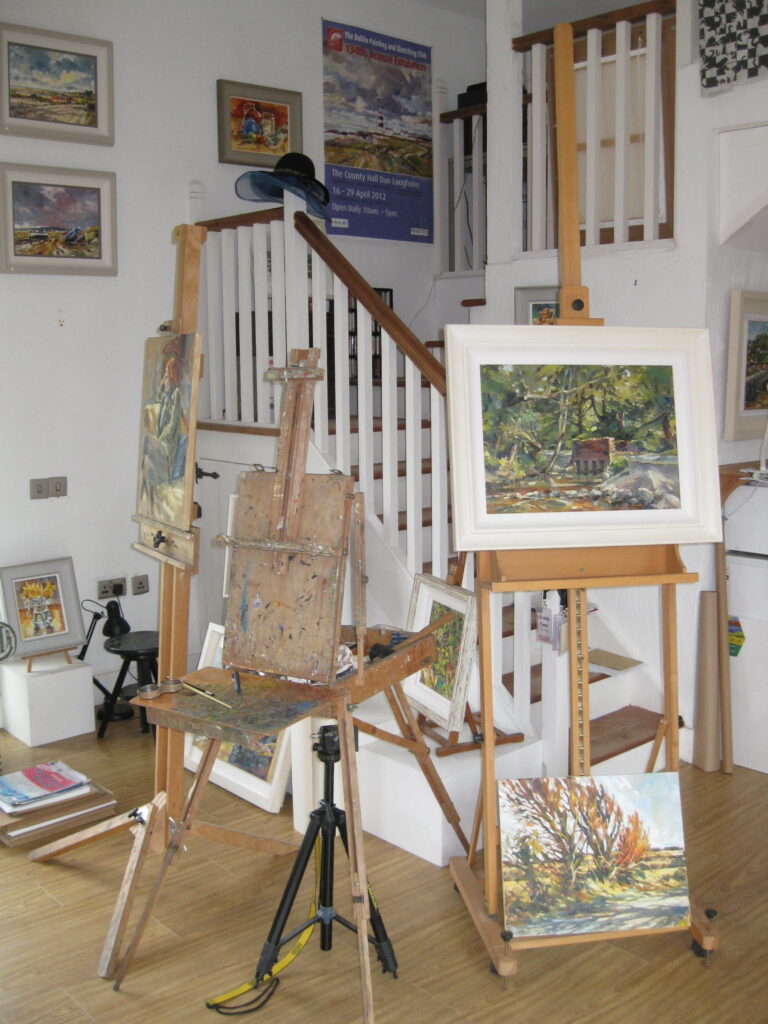
My work routine goes through phases. The summer months are mainly devoted to painting activities, as I work outside to paint, and the winter months (November, December, January and February) are admin. This can involve writing, designing, work on the computer, keeping a data base of my paintings up to date or dealing with printers. I have a mezzanine in the studio and the computer is upstairs so it is very cosy in the winter. I also scan or copy my paintings during this time for my data base. I like to have the original paintings beside me as I do this to colour match them as near as possible to the results on the computer. Having a visual record of my work is important for exhibitions, publicity, my website or any printed material I wish to produce.
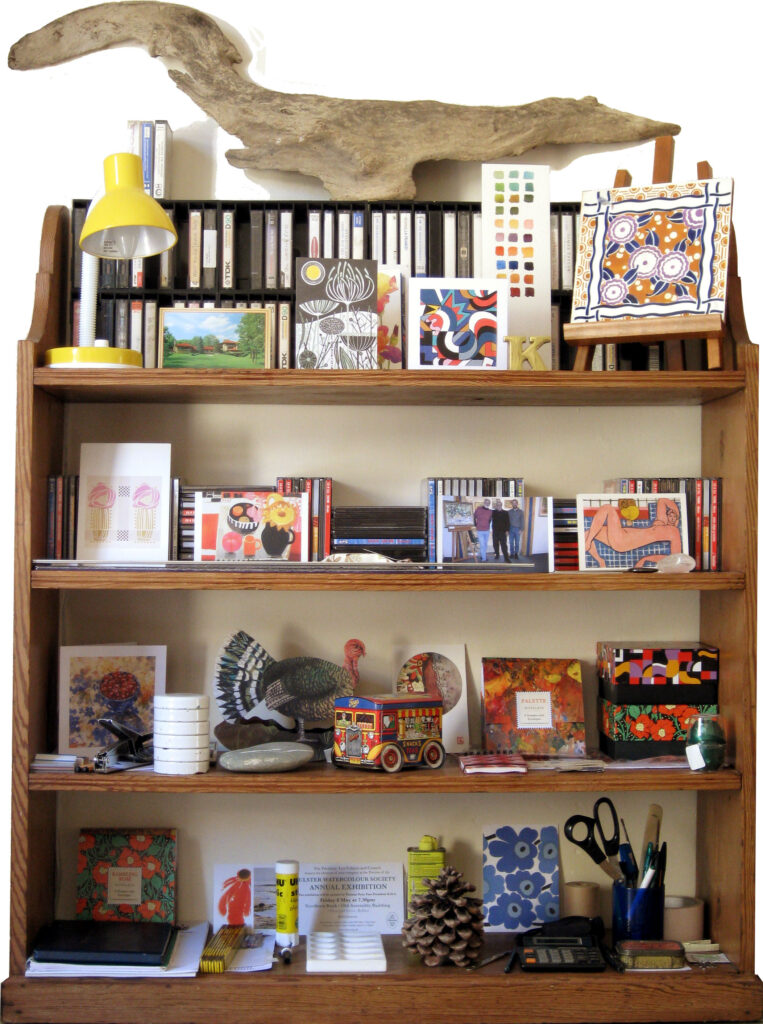
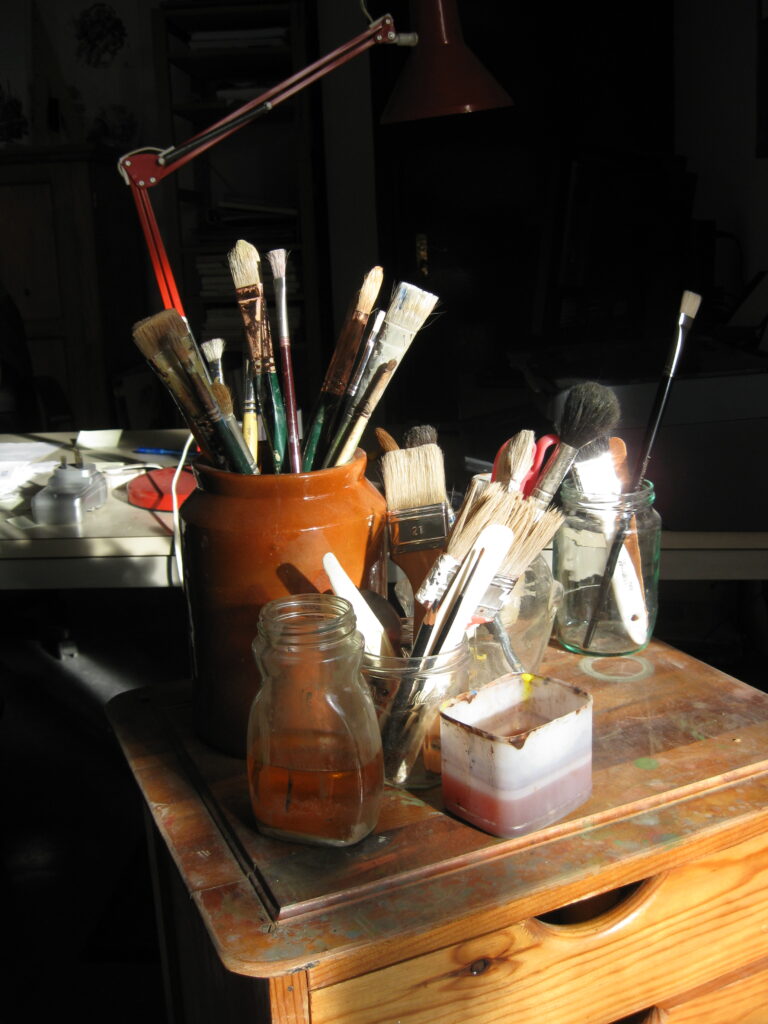
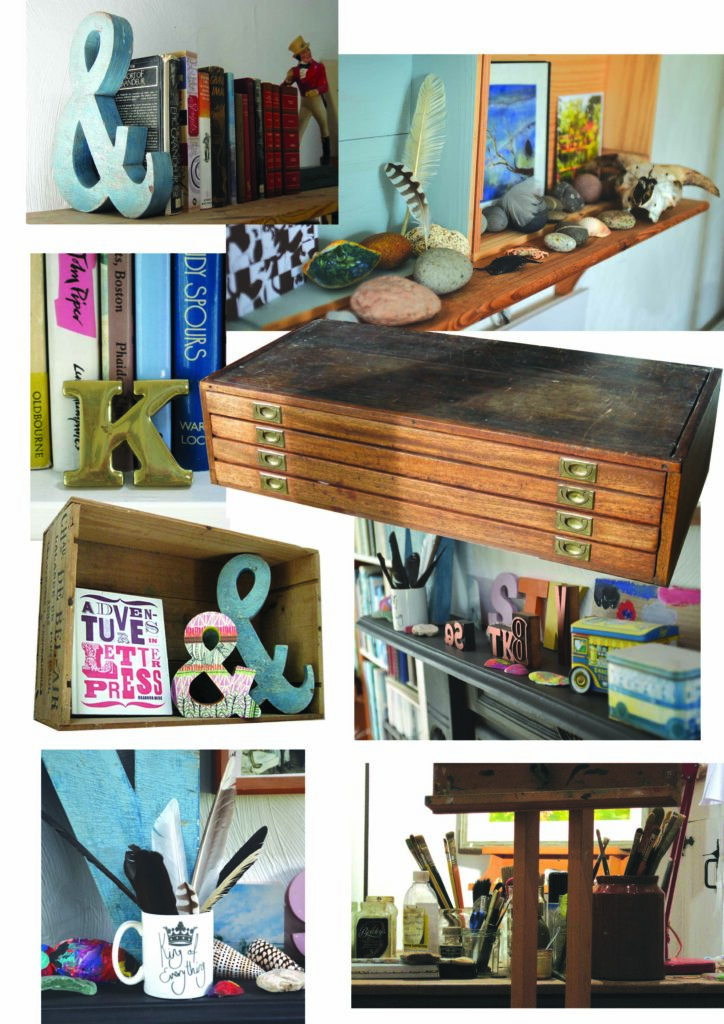
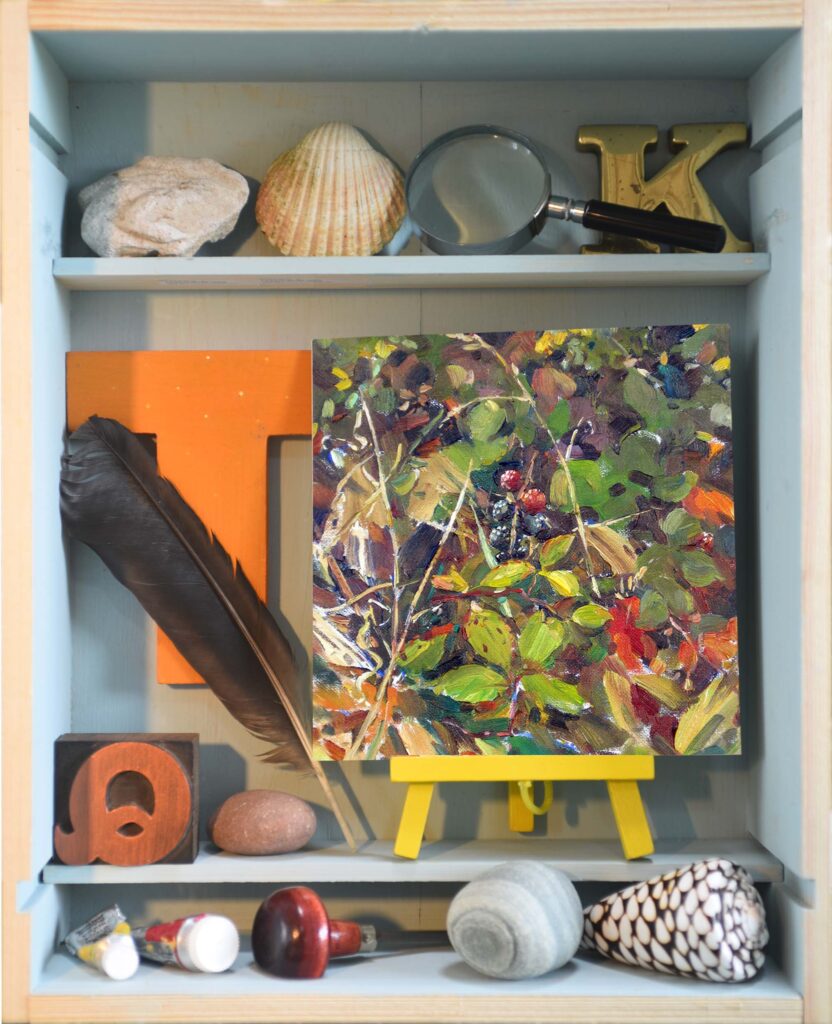
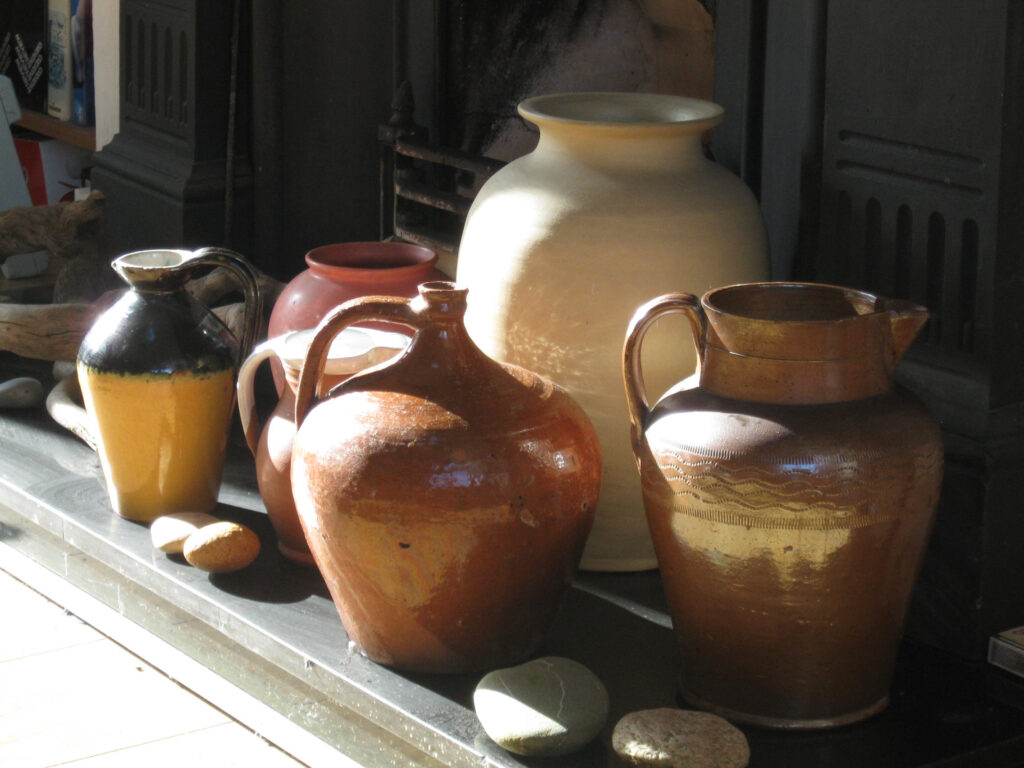
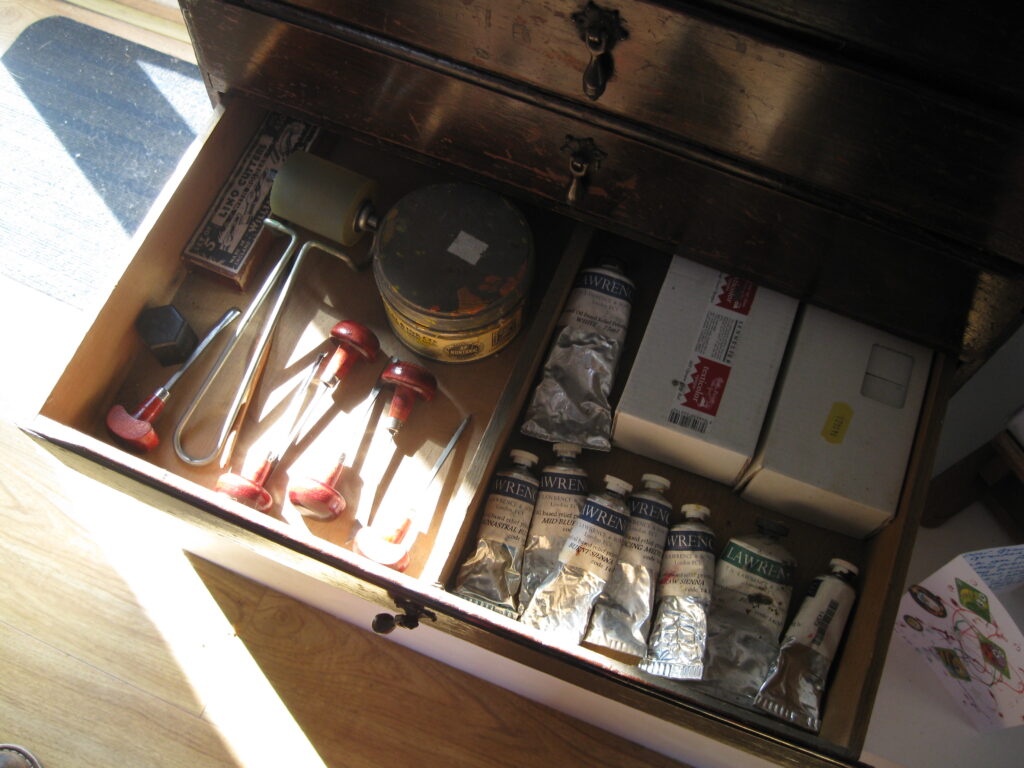
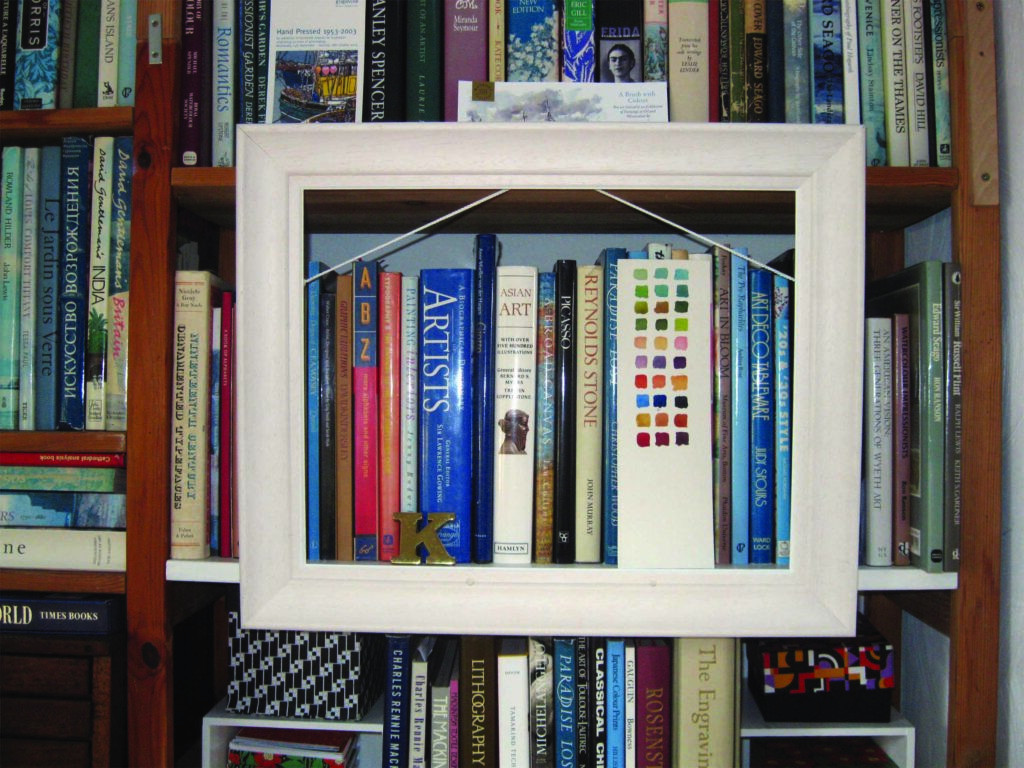
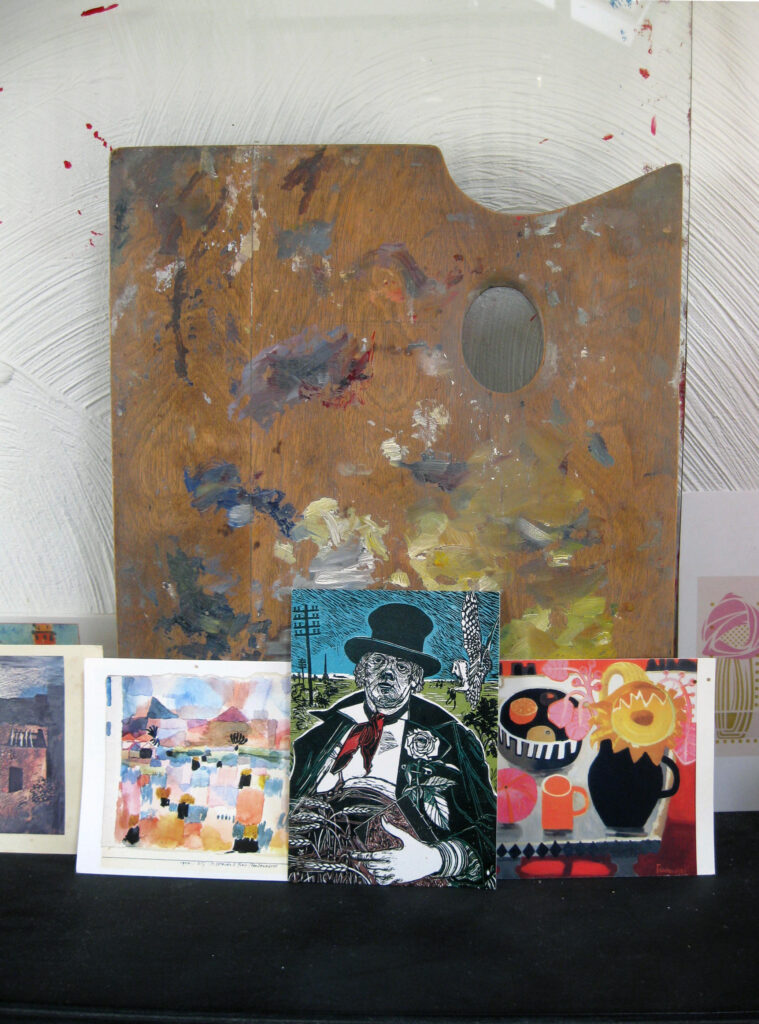
I surround myself with things I find on the beach, in the fields or in junk shops. Driftwood, shells, interesting rocks. Old (antique) studio equipment, wooden letters from the days of letterpress printing all go into the mix of making the studio an interesting place to work. The collection of pots below was acquired over many years as props for paintings; they come from France, the UK and Ireland. Many of these things cost nothing, those that did, cost very little. Perhaps my most treasured possession is my collection of books. They were built up over many years and many are now long out of print. They cover all aspects of painting, the applied arts, design, printing and history of art as well as the history of gardens and garden design. There are boxes full of cuttings from magazines and newspapers and lever arch files filled with design ideas and reference material. I have made several attempts to catalogue it all but I give up after a few days. The problem is compounded by the computer which is now also full of reference material growing by the day together with a visual archive of my work. There was a time when I wanted nothing to do with computers; I come from a background when most things were done by hand but the computer has enabled me to bring to fruition many of my design ideas and has added another dimension to my working day. To me it is a tool, it adds something to what I do, it does not take away. Every project still starts with a drawing or scribble; I think with a pencil or a brush in my hand, not a mouse.
When I lock the door behind me of an evening and make the short walk across to the house I usually take two or three books with me to thumb through while I watch television, or a pad to scribble down ideas. It’s a habit my daughter has inherited from me; she is also a designer. Locking the door is important, it helps me separate work from home. I try to work to a strict routine and keep my domestic life and work life apart but it can be difficult. That short space between the two buildings makes all the difference.
| Cookie | Duration | Description |
|---|---|---|
| cookielawinfo-checkbox-analytics | 11 months | This cookie is set by GDPR Cookie Consent plugin. The cookie is used to store the user consent for the cookies in the category "Analytics". |
| cookielawinfo-checkbox-functional | 11 months | The cookie is set by GDPR cookie consent to record the user consent for the cookies in the category "Functional". |
| cookielawinfo-checkbox-necessary | 11 months | This cookie is set by GDPR Cookie Consent plugin. The cookies is used to store the user consent for the cookies in the category "Necessary". |
| cookielawinfo-checkbox-others | 11 months | This cookie is set by GDPR Cookie Consent plugin. The cookie is used to store the user consent for the cookies in the category "Other. |
| cookielawinfo-checkbox-performance | 11 months | This cookie is set by GDPR Cookie Consent plugin. The cookie is used to store the user consent for the cookies in the category "Performance". |
| viewed_cookie_policy | 11 months | The cookie is set by the GDPR Cookie Consent plugin and is used to store whether or not user has consented to the use of cookies. It does not store any personal data. |